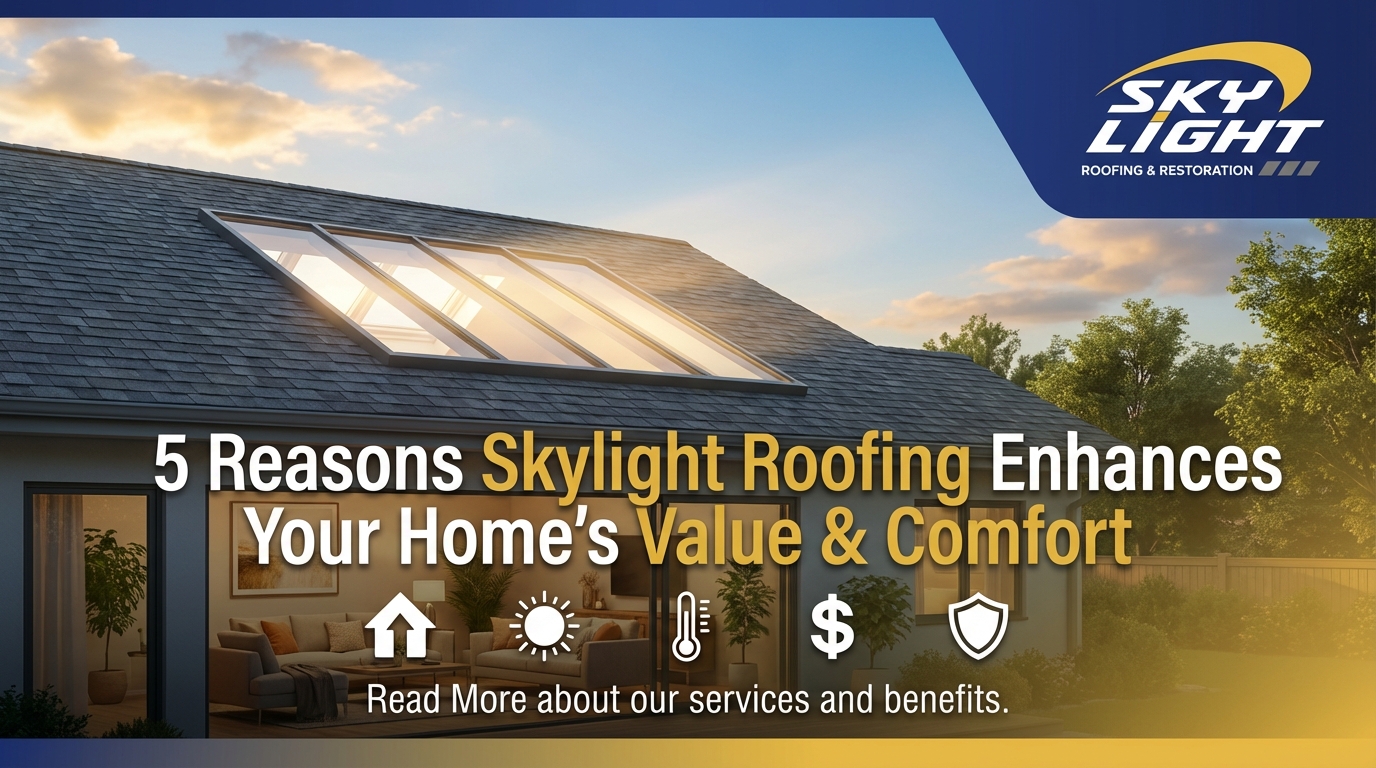
5 Reasons Skylight Roofing Enhances Your Home's Value & Comfort
When homeowners consider major renovations to increase property value, they often look at kitchen remodels or finished basements. However, one of the most transformative yet underutilized upgrades is skylight roofing. Integrating high-quality skylights into your roofing system does more than just offer a glimpse of the clouds; it fundamentally alters the architectural DNA of your living space. By bringing the outside in, skylights solve common residential issues such as poor lighting, stagnant air, and cramped aesthetics, all while offering a measurable return on investment (ROI). At Skylight Roofing & Restoration, we believe that a roof should do more than just protect your home—it should actively enhance your quality of life.
How does skylight roofing increase home value and comfort? Skylight roofing enhances home value by increasing natural light, improving energy efficiency through passive heating, and boosting curb appeal, which can yield an ROI of 15% to 80%. It improves comfort by regulating circadian rhythms, providing natural ventilation to reduce indoor pollutants, and creating an architectural 'wow factor' that makes rooms feel larger and more inviting.
The decision to install skylights is often driven by a desire for a brighter, more modern home, but the technical benefits go much deeper. From smart home integration that automatically reacts to rain to advanced acoustic glazing that dampens the roar of a summer storm, modern skylight technology has evolved far beyond the leak-prone bubbles of the past. In this comprehensive guide, we will explore the five primary reasons why investing in professional skylight installation is a strategic move for both your financial future and your daily well-being.
1. Illuminating ROI: Real-World Data on How Skylights Boost Property Value
In the competitive real estate market of New Jersey, the "wow factor" is a tangible asset. When a potential buyer walks into a home bathed in natural sunlight, their emotional connection to the space increases instantly. This psychological response translates directly into market value. Appraisers and real estate experts often note that homes with ample natural light sell faster and for higher prices than those with dark, gloomy interiors. Skylights serve as a permanent lighting fixture that never needs to be turned on, making every square foot of your home appear more valuable during a walkthrough.
Marketability and the 'Wow' Factor
The visual impact of a skylight is immediate. Unlike standard windows, which are often blocked by neighboring houses or landscaping, skylights offer unobstructed access to the sky. This creates a sense of luxury and custom design that sets a property apart from cookie-cutter builds. For many buyers, a skylight represents a premium upgrade they won't have to install themselves, moving your home to the top of their list. This increased desirability often results in shorter days on market and stronger negotiating leverage for the seller.
Regional ROI Variations: New Jersey vs. National Averages
While national data suggests an ROI ranging from 15% to 80%, regional factors play a massive role. In areas with fluctuating seasons like the Northeast, skylights are particularly prized. During the shorter, darker days of a New Jersey winter, the ability to capture maximum sunlight is a significant selling point. Conversely, in high-heat regions like Texas, the focus shifts toward high-performance glazing to prevent heat gain. For New Jersey homeowners, a well-placed skylight balances these needs, providing warmth in the winter and, with modern venting options, cooling in the summer, maximizing the financial return across all four seasons.
Appraisal Impact and Perceived Quality
Appraisers look for "quality of finish" and "functional utility." A skylight that transforms a dark attic into a functional home office or makes a small bathroom feel like a spa directly impacts these metrics. By improving the utility of otherwise underused spaces, skylights can effectively increase the usable "feeling" of the square footage. While they may not add to the literal footprint of the house, the increase in perceived quality and modern appeal often leads to a higher valuation compared to identical homes without natural light features.
2. Beyond the Glow: Maximizing Energy Efficiency and Slashing Utility Bills
One of the most common misconceptions about skylights is that they are energy drains. In reality, modern energy-efficient skylights are designed to act as thermal regulators. By using advanced Low-E (low-emissivity) coatings and argon gas fills between panes, these units minimize heat transfer. This means they keep the heat out during a humid July day and trap warmth inside during a snowy January night. When integrated correctly into a professional roofing system, skylights become a tool for reducing your home's overall carbon footprint and monthly expenses.
Passive Solar Heating and Thermal Performance
Strategic placement is the key to energy savings. South-facing skylights can capture significant solar heat during the winter, reducing the load on your furnace. This concept, known as passive solar heating, uses the sun's natural energy to warm the surfaces inside your home. During the summer, these same skylights can be equipped with integrated blinds or heat-reflective coatings to prevent overheating. This dual-purpose functionality ensures that your roofing system is working for you year-round, optimizing thermal performance regardless of the temperature outside.
Reducing Dependency on Artificial Lighting
The most immediate impact on your utility bill is the reduction in electricity used for lighting. Even on overcast days, a skylight can provide enough ambient light to illuminate a room completely, eliminating the need for overhead lights or lamps. In large communal areas like kitchens or living rooms, this can result in hundreds of hours of reduced bulb usage annually. Over the lifespan of the skylight—typically 20 to 30 years when installed by experts—the cumulative savings on electricity can go a long way toward offsetting the initial installation cost.
The Role of Proper Flashing and Insulation
Energy efficiency is only as good as the installation. At Skylight Roofing & Restoration, we emphasize the importance of air-tight seals and high-quality flashing. Poorly installed skylights can lead to air leaks, which force your HVAC system to work harder. By ensuring a seamless integration with your existing shingles or metal roof, we eliminate drafts and moisture intrusion. A truly efficient skylight is one that you don't even notice is there, except for the beautiful light it provides and the lower energy bills you receive each month.
3. The Comfort Quotient: Using Natural Ventilation for Superior Air Quality
Indoor air quality is often overlooked, yet it is a critical component of home comfort. Modern homes are built to be extremely airtight, which is great for efficiency but can lead to the buildup of volatile organic compounds (VOCs), odors, and excess moisture. "Venting" skylights—those that can be opened manually or electronically—provide a powerful solution. By utilizing the principles of thermodynamics, these skylights can flush out stale air more effectively than traditional windows, creating a fresher, healthier living environment for your family.
The Stack Effect: Natural Cooling Strategies
Venting skylights take advantage of the "chimney effect" or "stack effect." Because warm air naturally rises, opening a skylight allows hot, buoyant air to escape through the roof. This creates a vacuum that pulls cooler air in through lower windows. This natural circulation can significantly lower the indoor temperature without turning on the air conditioner. This is especially beneficial in two-story homes where the upper floor often becomes uncomfortably hot; a venting skylight acts as a release valve for that trapped heat.
Eliminating Moisture and Mold in High-Humidity Zones
Kitchens and bathrooms are the humidity hubs of any home. Steam from showers and cooking can lead to condensation, which eventually promotes mold and mildew growth. While standard exhaust fans help, they often struggle to keep up with heavy moisture. A venting skylight provides a massive exit point for humidity. By allowing steam to rise directly out of the house, you protect your paint, cabinetry, and structural timber from moisture damage. This proactive approach to ventilation preserves the longevity of your interior finishes and improves the overall air quality.
Reducing Indoor Pollutants and Allergens
Natural ventilation helps dilute indoor air pollutants such as pet dander, dust, and smoke. Unlike mechanical ventilation systems that often recirculate air, opening a skylight provides a direct exchange with fresh outdoor air. This is particularly vital during the spring and fall when temperatures are mild. For allergy sufferers, the ability to quickly flush out indoor irritants can lead to significant improvements in daily comfort and respiratory health, making the home a true sanctuary.
4. Architectural Magic: Enhancing Aesthetics and the Illusion of Square Footage
Architecture is not just about the walls and floors; it's about how light interacts with those surfaces. Skylights are often referred to as "architectural magic" because they can change the perceived dimensions of a room. By drawing the eye upward, they emphasize ceiling height and create a sense of vertical volume that standard windows cannot match. For homeowners living in smaller urban dwellings or older suburban houses with low ceilings, skylights are the most effective way to make a space feel grand and expansive without the cost of a full addition.
The Psychology of Vertical Light vs. Horizontal Light
The human brain perceives vertical light—light coming from above—differently than horizontal light from side windows. Vertical light is more consistent and tends to feel more "natural," mimicking the experience of being outdoors. This type of illumination reduces shadows in the corners of rooms, which is a key factor in making a space feel larger. Studies in environmental psychology suggest that spaces with overhead light are perceived as safer and more open, which contributes to a profound sense of comfort and relaxation for the inhabitants.
Maintaining Privacy Without Sacrificing Light
In densely populated areas of New Jersey, privacy is a major concern. Traditional windows often require curtains or blinds to block the view from neighbors, which also blocks the light. Skylights solve this dilemma perfectly. They provide a direct line to the sky while remaining completely out of the line of sight from the street or the house next door. This allows you to flood a bathroom or bedroom with sunlight while maintaining 100% privacy. It is the ultimate compromise for modern living: total openness to the elements with total protection from prying eyes.
Creating Focal Points and Design Accents
A well-placed skylight can act as a natural spotlight for interior design features. Whether it’s illuminating a kitchen island, a piece of artwork, or a staircase, the play of light and shadow throughout the day adds a dynamic element to your home’s interior. As the sun moves across the sky, the atmosphere of the room shifts, providing a living design element that evolves from morning to dusk. This level of aesthetic sophistication is a hallmark of high-end home design and adds significant perceived value to the property.
5. The Wellness Advantage: Biological Comfort and Mental Health Benefits
Beyond financial and structural benefits, skylight roofing offers profound biological advantages. Humans have an innate biological need for sunlight, which regulates several key physiological processes. In the modern world, where we spend upwards of 90% of our time indoors, we often suffer from "light hunger." Bringing more natural light into the home isn't just a design choice; it's a wellness intervention. By aligning our indoor environments with natural solar cycles, we can improve our sleep, our mood, and our overall health.
Circadian Rhythm Regulation and Sleep Quality
Our bodies rely on the blue light spectrum found in morning sunlight to reset our internal clocks, known as circadian rhythms. This process triggers the production of serotonin (the "feel-good" hormone) and suppresses melatonin (the sleep hormone) during the day. By starting your day in a sun-drenched room, you help your body signal that it’s time to be awake and alert. Conversely, the natural fading of light in the evening through a skylight helps the body prepare for rest. This alignment leads to deeper, more restorative sleep and improved daytime energy levels.
Vitamin D Production and Productivity Boosts
While glass does block most UVB rays (which are responsible for Vitamin D synthesis), the psychological and physiological effects of visible sunlight are undeniable. Increased exposure to natural light has been linked to higher productivity levels and better concentration. For those working from home, a skylight in the office can reduce eye strain caused by the flicker of fluorescent bulbs or the glare of computer screens. The presence of natural light also helps stave off Seasonal Affective Disorder (SAD), a common issue in the Northeast during the winter months when outdoor time is limited.
Reducing Stress Through Nature Connection
Biophilic design—the practice of connecting buildings to the natural world—is proven to reduce cortisol levels, the body's primary stress hormone. A skylight provides a constant visual connection to the weather, the clouds, and the stars. This connection helps ground us and reduces the "boxed-in" feeling of modern living. Whether it's watching a gentle rain fall on the glass or tracking the phases of the moon from your living room, the subtle reminders of the natural world outside contribute to a more peaceful, tranquil home environment.
Technological Edge: The Rise of Smart Skylights and Modern Home Tech
The skylights of today are far more advanced than those of a decade ago. Integration with smart home ecosystems has solved many of the traditional "pain points" associated with roof windows. Today’s high-tech units are designed for homeowners who want the benefits of natural light without any of the manual upkeep or worry. These innovations make skylights a perfect fit for the tech-savvy buyer who values automation, safety, and precision control over their home environment.
Rain Sensors and Automated Venting
One of the biggest fears homeowners have is leaving a venting skylight open during a surprise rainstorm. Modern smart skylights feature integrated rain sensors that detect the first few drops of moisture and automatically trigger the window to close and lock. Furthermore, systems like VELUX ACTIVE can monitor indoor CO2 levels, humidity, and temperature, automatically opening the skylight to refresh the air when sensors indicate that the environment has become stagnant. This "set it and forget it" technology ensures your home stays fresh and dry without any effort on your part.
Dynamic Glazing and App-Controlled Shading
Controlling the amount of light and heat that enters your home is now easier than ever. Solar-powered blinds can be installed directly into the skylight frame and controlled via a smartphone app. You can set schedules for the blinds to close during the hottest part of the day or open them remotely to let in a breeze. Some advanced units even feature electrochromic glass (dynamic glazing) that tints on demand, allowing you to reduce glare and heat at the touch of a button while still maintaining a view of the sky. This level of control is a major selling point for modern, energy-conscious buyers.
Noise Pollution Mitigation: Acoustic Comfort in Urban Environments
While we often talk about the visual benefits of skylights, their acoustic performance is equally important. For homeowners living near busy roads, airports, or in bustling New Jersey suburbs, noise pollution is a significant detractor from home comfort. High-performance skylights are engineered with sound-dampening technology that can make your home significantly quieter than traditional roof structures or older windows might allow.
Advanced Glazing vs. Traditional Windows
Standard skylights are often double-paned, but premium units designed for acoustic comfort utilize laminated glass. This laminated layer acts as a buffer that absorbs sound vibrations rather than passing them through. This is particularly effective at reducing the "drumming" sound of rain on the glass, as well as high-frequency noises like traffic or sirens. When you install a high-quality skylight, you aren't just letting in light; you are often improving the overall sound insulation of your roofing system, leading to a quieter, more peaceful interior.
Practical Considerations: Choosing the Right Skylight for Your Climate and Roof Type
Successful skylight integration requires a deep understanding of roofing mechanics. Not every skylight is right for every roof, and choosing the wrong type can lead to maintenance headaches down the road. At Skylight Roofing & Restoration, we carefully assess your roof pitch, roofing material, and local climate before making a recommendation. Whether you have a traditional asphalt shingle roof or a modern metal roofing system, the installation process must be precise to ensure long-term value and performance.
Shingle vs. Metal Roof Installations
Installation techniques vary significantly depending on your roofing material. Asphalt shingles are relatively forgiving and allow for standard flashing kits that integrate seamlessly with the overlapping layers. Metal roofs, however, require specialized flashing and often custom curbs to ensure a watertight seal. Metal expands and contracts with temperature changes, meaning the skylight mounting must account for this movement. Choosing a contractor with experience in both materials is vital to preventing leaks and ensuring that the skylight doesn't compromise the structural integrity of the roof.
Maintenance Reality: Preserving Value Over 20 Years
To maintain the value added by a skylight, regular maintenance is essential. This doesn't have to be complicated, but it must be consistent. We recommend a yearly inspection of the flashing and seals to ensure that no debris has built up and that the weatherproofing remains intact. Cleaning the glass is also important; while many modern skylights feature "neat" glass that uses UV rays to break down organic dirt, a quick rinse every season will keep the light quality at its peak. By treating your skylight as a precision instrument, you ensure it remains an asset rather than a liability for decades to come.
Conclusion: Long-Term Value and the Future of Your Brightened Home
Adding a skylight to your home is one of the few renovations that simultaneously improves your property's market value, energy efficiency, and your personal well-being. It is an investment in the "atmosphere" of your home, turning ordinary rooms into extraordinary spaces filled with life and light. From the psychological benefits of a synchronized circadian rhythm to the hard financial data of a 15-80% ROI, the case for skylight roofing is clear. It is the ultimate upgrade for the homeowner who refuses to choose between luxury and logic.
At Skylight Roofing & Restoration, we specialize in making these complex installations simple. We focus on transparency, craftsmanship, and a no-pressure approach, ensuring that your journey from a dark room to a sun-lit sanctuary is seamless and stress-free. Your roof is the most critical part of your home's envelope; let us help you turn it into your home's most beautiful feature.
Ready to Get Started?
We provide complete home renovation services focused on craftsmanship, clean job sites, and clear communication, making the process simple and transparent through photo-documented inspections and a no-pressure experience.
Visit Our Homepage