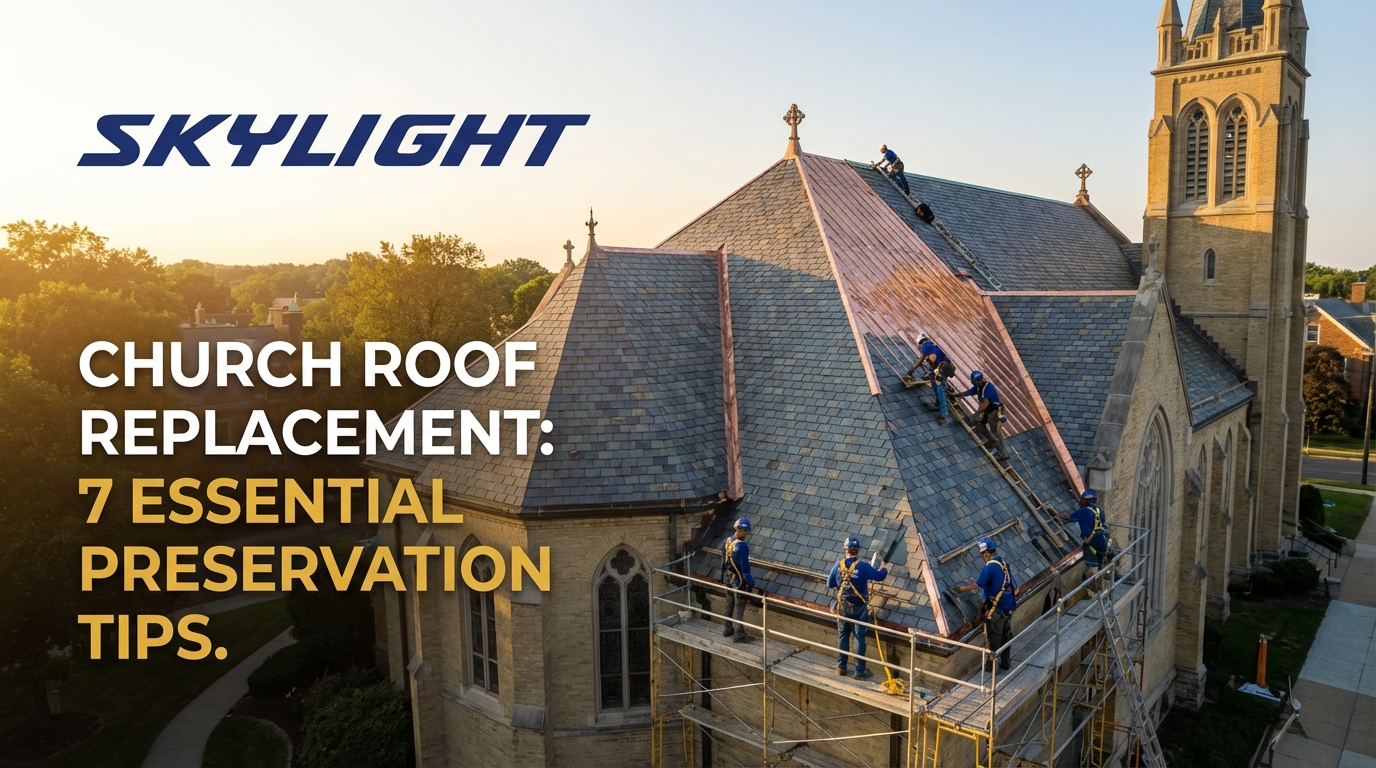
Church Roof Replacement: 7 Essential Preservation Tips
For many communities, a church is more than just a building; it is a repository of history, a center for spiritual life, and a landmark of architectural heritage. When the time comes for a church roof replacement, the stakes are significantly higher than a standard residential project. These structures often feature complex geometry, historic materials, and invaluable interior assets like pipe organs, hand-painted frescoes, and delicate plasterwork. Protecting these elements requires a specialized approach that balances modern engineering with deep respect for the craftsmen of the past.
How do you know when a church needs a roof replacement? A church roof requires replacement when structural leaks threaten interior assets or when high-altitude materials like slate, copper, or clay reach the end of their functional lifecycle. Professional inspections, including drone-assisted surveys and Quinquennial reports, are essential to identify systemic failures before they cause irreversible damage to the sanctuary below.
The Sacred Canopy: Understanding the Spiritual and Structural Importance of Your Church Roof
In ecclesiastical architecture, the roof is far more than a weather barrier; it carries deep theological symbolism. The central part of the church, known as the "nave," derives its name from the Latin word navis, meaning ship. Historically, church roofs were often constructed using techniques similar to shipbuilding, with the timber framing resembling an inverted hull. This symbolism suggests that the church is a vessel carrying the faithful through the storms of life. When you invest in a church roof replacement, you are literally maintaining the canopy of heaven for your congregation.
The Canopy of Heaven
The roof serves as a protective shell for the sacred space within. Unlike commercial warehouses or suburban homes, the volume of air within a cathedral or chapel creates a unique microclimate. The roof must manage heat and moisture effectively to prevent the degradation of interior wood and stone. If the roof fails, the environmental stability of the sanctuary is compromised, leading to the rapid decay of historic artifacts that may be centuries old. Understanding this spiritual and structural duality is the first step in successful stewardship.
Structural Complexity and High-Altitude Risks
Church roofs are renowned for their steep pitches and soaring steeples. These architectural features were designed to draw the eye upward toward the divine, but they present significant challenges for modern contractors. The height of a steeple or spire makes it susceptible to high-wind events and lightning strikes. Furthermore, the sheer weight of traditional materials like slate or heavy clay tiles requires a robust underlying support structure. During a replacement, a thorough assessment of the timber trusses and rafters is vital to ensure they can continue to support the massive load of a new roof system.
Assessing the Need: Identifying Critical Signs of Failure in High-Altitude Architecture
Identifying the need for a new roof on a church is often complicated by the building’s height. From the ground, a roof may look pristine, while hidden failures are occurring 60 feet in the air. One of the most common signs of trouble is the presence of "slipped" or missing slates. On a slate roof, the iron nails used a century ago eventually succumb to "nail sickness" (rusting through), causing the tiles to slide out of place. A single missing slate can allow gallons of water to penetrate the building during a heavy New Jersey rainstorm.
Interior Indicators and Mural Damage
Often, the first sign of a failing roof is found on the ceiling of the sanctuary. Water stains on plasterwork, peeling paint on murals, or a musty odor in the choir loft are urgent warnings. For churches housing pipe organs, even a minor leak can be a financial catastrophe. The fluctuating humidity caused by roof leaks can warp the wood of the organ pipes and cause mechanical failures in the instrument’s delicate console. Regular monitoring of these interior assets is a crucial part of roof stewardship.
The Role of Quinquennial Surveys
Many historic denominations follow a "Quinquennial" survey schedule—a professional inspection conducted every five years. This survey is not just a cursory glance; it is a detailed health check of the entire building fabric. During these inspections, architects and specialized roofing contractors look for masonry cracks, flashing failure, and drainage issues. Catching a failing flashing detail on a valley or around a chimney during a Quinquennial survey can save a congregation hundreds of thousands of dollars in restoration costs later.
Material Selection: Balancing Historical Authenticity with Modern Durability
When it comes to church roof replacement, the choice of material is a decision that will impact the next four to five generations. While modern asphalt shingles are cost-effective, they lack the longevity and aesthetic gravitas required for most historic sacred spaces. The primary materials used in church roofing—slate, copper, and clay—each offer unique benefits and challenges that must be weighed by the building committee.
Slate: The "Forever" Roof
Natural slate is perhaps the most iconic church roofing material. It is fireproof, resistant to mold, and can easily last 100 to 150 years if installed correctly. However, slate is heavy and expensive. When replacing a slate roof, it is essential to source stone that matches the original color and texture, whether it be Vermont Sea Green or Pennsylvania Black. Contractors must also use copper or stainless steel nails to prevent the "nail sickness" mentioned earlier, ensuring the new roof lives up to its century-long potential.
Copper and Metal Details
Copper is the gold standard for flashing, gutters, and decorative elements on sacred buildings. As copper ages, it develops a beautiful green patina that provides a natural protective layer against the elements. For steeples and domes, standing-seam copper or copper shingles offer incredible durability and flexibility, allowing the metal to be formed around complex curves. While the upfront cost is high, copper's lifespan and low maintenance requirements make it a wise long-term investment for a growing congregation.
Comparing Roofing Materials for Churches
Natural Slate 100+ Years Very High Premium Copper 80+ Years Very High High Synthetic Slate 50 Years Moderate Moderate High-End Asphalt 25-30 Years Low EconomicalThe True Cost of Preservation: Decoding Estimates, Complexity, and Labor
When a church committee receives a quote for a roof replacement, there is often a sense of sticker shock. It is important to understand that a significant portion of the cost of a church roof is not the material itself, but the labor and safety infrastructure required to install it. Unlike a residential home where a crew can walk across the roof, many church projects require extensive scaffolding, man-lifts, and specialized fall-protection systems. The safety of the workers and the protection of the congregation are non-negotiable expenses.
Factors Influencing the Budget
Several factors drive up the cost of church roofing. First is access. If the church is located in a dense urban area with little staging space, logistics become a major hurdle. Second is the pitch. Extremely steep roofs slow down production significantly and require more specialized skill sets. Finally, there is the "hidden damage" factor. In many historic churches, the true condition of the roof deck isn't known until the old shingles are removed. A professional contractor like Skylight Roofing & Restoration will always include a contingency plan for repairing rot or structural deficiencies discovered during the tear-off.
The Conflict: Modern Materials vs. Historic Accuracy
One of the most challenging aspects of a church roof replacement is navigating the debate between congregational members. Some may advocate for the cheapest possible modern materials to save money for missions or programs. Others will insist on expensive, historically accurate materials to preserve the building's integrity. The key to resolving this conflict is a long-term cost-benefit analysis. While an asphalt roof is cheaper today, it will need to be replaced four times within the lifespan of a single slate roof. When factoring in the cost of four separate mobilizations and tear-offs, the historic material often proves to be the better financial steward over a 100-year period.
Funding the Future: Grants, Specialized Loans, and Congregational Support
Financing a massive capital project like a roof replacement requires a multifaceted approach. Most churches do not have the liquid cash available to cover a six-figure roofing bill. Fortunately, there are several resources available for sacred spaces, especially those with historic designations. For New Jersey congregations, the State Historic Preservation Office (SHPO) often provides guidance and sometimes grants for projects that follow strict preservation standards.
External Grant Resources
Organizations like Partners for Sacred Places and the National Trust for Historic Preservation offer resources and grant programs specifically designed for active congregations. These grants often require the church to demonstrate the building’s significance to the broader community, not just the congregation. Highlighting the social services, music programs, or historic value of the building can make a church a strong candidate for external funding. Additionally, the Secretary of the Interior's Standards for Treatment of Historic Properties serves as a vital guide for any church seeking preservation funding.
Congregational Fundraising Strategies
Inside the church walls, "Buy-a-Slate" campaigns have been successful for decades. This allows families to donate the cost of a single roofing tile, often with the option to write a prayer or a name on the back of the slate before it is installed. This creates a tangible connection between the congregation and the fabric of the building. Transparent communication through town halls and photo-documented reports from your roofing contractor can help build the trust necessary for a successful capital campaign.
Historic Restoration Best Practices: Matching the Craftsmen of the Past
When performing a church roof replacement, the goal is not to make the building look "new," but to make it look well-cared-for and authentic to its original design. This requires a contractor who understands traditional masonry and metalwork. For example, the way a gutter is integrated into a stone cornice (a built-in gutter) is vastly different from hanging a modern aluminum trough. If these historic details are ignored, the aesthetic and functional integrity of the building is lost.
The Importance of Specialized Craftsmen
A roofing crew that spends 99% of its time on residential asphalt will likely lack the tools and experience to handle a lead-coated copper valley or a slate turret. Historic restoration requires "steeple jacks"—specialized roofers comfortable working at extreme heights with traditional hand tools. It is crucial to vet your contractor by asking for a portfolio of previous church work. Seeing how they handled complex intersections and decorative ridge caps on other sacred buildings is the best way to gauge their suitability for your project.
Protecting the Sanctuary During Construction
The actual construction process is a high-risk time for the church. A sudden thunderstorm during the tear-off phase can destroy a $100,000 pipe organ or ruin centuries-old pews. Best practices include a strict "dry-in" policy where only as much of the roof is removed as can be recovered by the end of the day. Furthermore, heavy-duty tarps and temporary internal protection (like plastic sheeting over the organ) are essential. At Skylight Roofing & Restoration, we prioritize clean job sites and daily weather-sealing to ensure the sacred space remains protected throughout the restoration process.
Modern Guardians: Utilizing Drones and Eco-Friendly Materials for Sacred Spaces
While we respect the past, we also embrace the future of roofing technology. One of the most significant innovations in church roof replacement and maintenance is the use of high-resolution drones. In the past, inspecting a 150-foot spire required a crane or a brave climber, costing thousands of dollars just for a look. Today, drone-assisted stewardship allows for non-invasive, 4K inspections that can zoom in on a single cracked slate or a failing lightning rod. This data allows committees to make informed decisions without the high cost of traditional access methods.
Building-Integrated Photovoltaics (BIPV)
For modern congregations looking to reduce their carbon footprint, Building-Integrated Photovoltaics (BIPV) offer an exciting solution. Unlike bulky blue solar panels that would look out of place on a historic chapel, BIPV tiles are designed to mimic the appearance of slate or clay. These "solar shingles" allow a church to generate its own electricity while maintaining the aesthetic heritage of the building. While the technology is still evolving, it represents a bridge between 19th-century architecture and 21st-century sustainability.
Eco-Friendly Insulation and Ventilation
A roof replacement is also the perfect time to address the building's thermal performance. Many old churches have zero insulation in the attic spaces, leading to massive heating bills. Modern, breathable insulation and improved ridge ventilation can be installed during the re-roofing process without altering the building's exterior appearance. This "green restoration" approach helps the church save money on utilities, which can then be redirected toward community outreach and congregational needs.
The Stewardship Plan: A Proactive Approach to Maintaining Your Congregation's Legacy
Once the new roof is installed, the work of stewardship does not end. A proactive maintenance plan is the only way to ensure the investment lasts for its intended lifespan. This includes semi-annual gutter cleanings, as clogged gutters are the number one cause of water backing up under the eaves and rotting out structural timbers. Every church should have a dedicated "Roof Logbook" where all inspections, repairs, and warranty information are stored for future generations of leadership.
Managing Vegetation and Debris
Overhanging trees can be a church roof's worst enemy. Falling branches can crack expensive slates, and excessive shade promotes the growth of moss and lichen. Lichen, in particular, secretes acids that can slowly digest limestone and slate. A regular schedule for trimming trees and professional, low-pressure roof cleaning (never power wash a slate roof!) will keep the materials in top condition. These small, low-cost steps prevent the need for another major church roof replacement for decades to come.
The Value of Professional Documentation
When you work with a contractor like Skylight Roofing & Restoration, you receive comprehensive photo documentation of the entire process. This isn't just for your peace of mind; it's a vital historical record. Having a digital archive of the roof's substructure, the specific materials used, and the details of the flashing allows future committees to understand exactly how the building was preserved. This transparency is at the heart of our mission to provide roofing you can trust.
Conclusion: Investing in a Sanctuary for Generations to Come
Replacing a church roof is a monumental task, but it is also a profound act of service. By choosing the right materials, hiring specialized craftsmen, and embracing modern technology like drone inspections, a congregation can ensure that their sacred space remains a beacon of hope and history for the next century. At Skylight Roofing & Restoration, we understand that we aren't just installing shingles or slate; we are preserving the legacy of your community. Whether you are facing an urgent leak or planning a multi-year restoration, we are here to provide the expertise and care your sanctuary deserves.
Ready to Preserve Your Sacred Space?
We provide specialized church and residential restoration services focused on craftsmanship, respect for property, and clear communication. Let us help you protect your congregation's legacy with a no-pressure, photo-documented roof assessment.
Visit Our Homepage