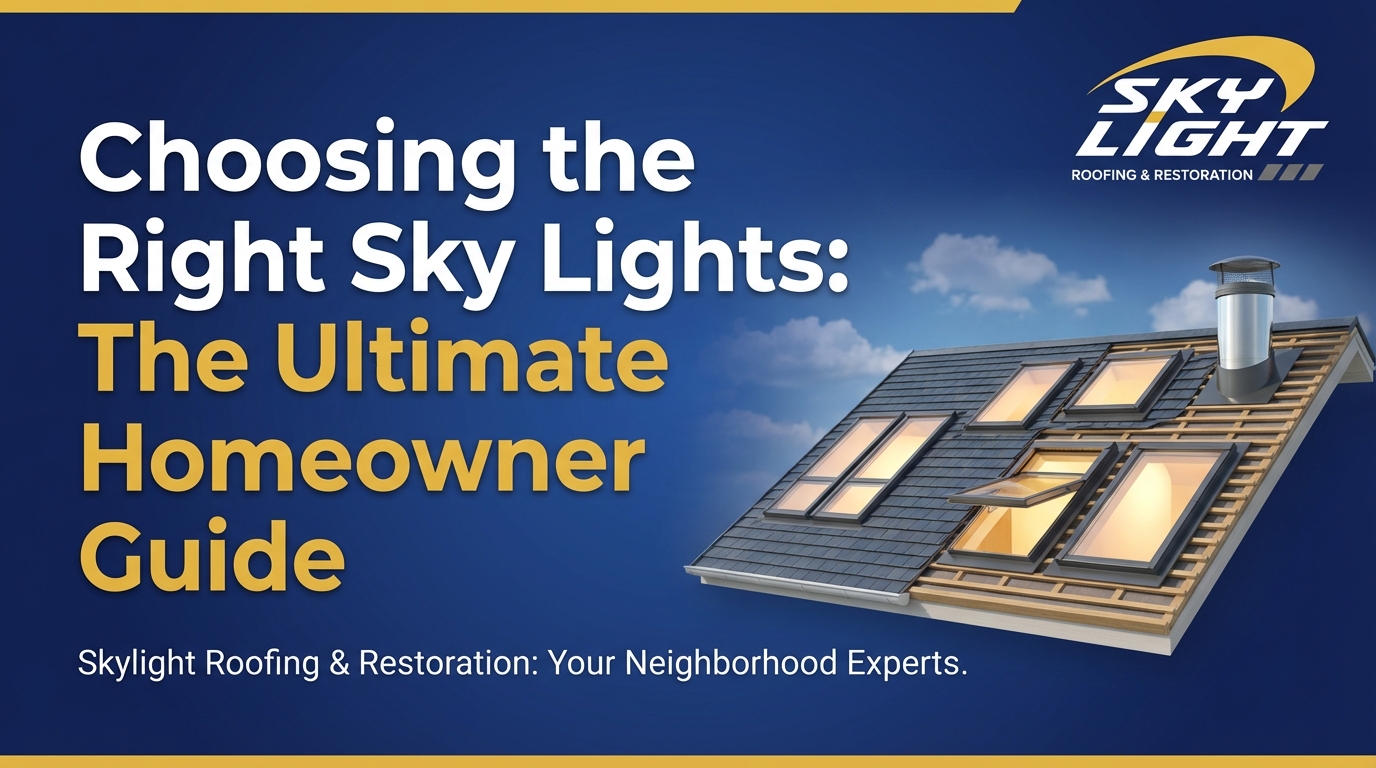
Choosing the Right Sky Lights: The Ultimate Homeowner Guide
The Complete Guide to Choosing the Right Sky Lights for Your Home
Choosing the right sky lights for your home is a high-stakes investment that blends architectural beauty with functional performance. Beyond merely "adding a window to the roof," a well-chosen skylight can transform a dim, uninspiring room into a vibrant, sun-drenched sanctuary while significantly reducing your reliance on artificial lighting. However, the process involves complex decisions regarding energy efficiency, structural integrity, and moisture control that go far beyond aesthetics.
For homeowners in New Jersey, where weather conditions shift from humid summers to freezing, snowy winters, the choice of a skylight is even more critical. A poorly selected unit or an amateur installation can lead to thermal loss, uncomfortable glare, or the dreaded roof leak. This guide serves as the definitive resource to help you navigate the technical specifications, style options, and financial considerations of skylight installation, ensuring your investment adds lasting value to your property.
1. The Core Styles: Fixed, Vented, and Tubular Explained
The first step in your journey is selecting the primary function of your skylight. Not all units are designed to open, and not all units are designed to provide a view. Understanding the three primary categories—fixed, vented, and tubular—is essential for matching the product to the specific needs of your room.
Fixed Skylights: The Visual Window
Fixed skylights are the most common choice for homeowners looking to maximize natural light without the need for additional ventilation. Because they do not open, they are inherently more airtight and less prone to mechanical failure than their vented counterparts. They are ideal for high ceilings where manual operation would be impossible and are often used in living rooms or hallways where the primary goal is to "bring the outside in."
Vented Skylights: Fresh Air and the "Chimney Effect"
Vented skylights are designed to open, providing both light and airflow. These are particularly valuable in kitchens and bathrooms, where they can exhaust steam, odors, and hot air. By opening a skylight, you create a "chimney effect," where warm air rises and escapes through the roof, drawing cooler air in through lower windows. Modern vented models come in manual, electric, and solar-powered configurations, often featuring integrated rain sensors that automatically close the unit at the first sign of moisture.
Tubular Skylights (Sun Tunnels)
For small spaces like walk-in closets, laundry rooms, or narrow hallways where a traditional skylight won't fit, tubular skylights are the perfect solution. These units consist of a highly reflective tube that captures sunlight on the roof and funnels it down into a diffuser on the ceiling. They are easier to install, require no major structural changes to your rafters, and can provide a surprising amount of soft, ambient light in windowless areas.
2. Strategic Placement: How Sun Orientation Dictates Your Comfort
Where you place your skylight on the roof is just as important as the model you choose. The orientation of the sun relative to your roof slope determines the quantity and quality of light you will receive throughout the day, as well as the amount of solar heat gain your home will experience.
North vs. South Facing Slopes
North-facing skylights provide a constant, cool, and diffused light that is ideal for art studios or home offices because it minimizes glare and prevents harsh shadows. Conversely, south-facing skylights offer the greatest potential for winter solar heat gain but can lead to overheating in the summer. If you opt for a south-facing installation, choosing high-performance glazing and integrated blinds is essential to maintain a comfortable indoor temperature.
East and West Considerations
East-facing skylights capture the morning sun, making them a popular choice for breakfast nooks or kitchens. West-facing installations provide intense afternoon light, which can be beautiful during sunsets but may require additional UV protection to prevent your furniture and flooring from fading over time.
3. Sizing Science: The 5-15% Rule for Perfect Lighting
A common mistake homeowners make is choosing a skylight that is either too small to make an impact or so large that it creates an unmanageable amount of heat. To achieve the perfect balance, industry professionals use the 5-15% rule. This guideline suggests that the total glass area of your skylights should be approximately 5% of the floor area for rooms with many windows, and up to 15% for rooms with few or no windows.
For example, in a 200-square-foot room, you should aim for roughly 10 to 30 square feet of skylight area. It is often more effective to install two smaller skylights spaced apart than one massive unit, as this distributes the light more evenly across the room and reduces deep shadows. Additionally, the height of the ceiling plays a role; higher ceilings allow the light to spread further, whereas lower ceilings create a more concentrated "spotlight" effect.
4. Glazing & Performance: Comparing Glass, Acrylic, and Energy Coatings
The "glazing" refers to the transparent material used in the skylight. Your choice here impacts energy bills, noise levels, and safety. While older skylights often used plastic or acrylic bubbles, modern high-end installations almost exclusively use tempered or laminated glass for superior performance and longevity.
Glass vs. Acrylic
Acrylic skylights are lightweight and affordable, but they tend to yellow over time, scratch easily, and offer poor insulation. Glass skylights, particularly those with double or triple panes, are much more durable and provide vastly better thermal insulation. Furthermore, laminated glass is highly recommended because it contains a thin interlayer that holds the glass together if it breaks, preventing shards from falling into your home—a critical safety feature for overhead installations.
Noise Reduction and Acoustic Performance
For homes in urban areas or near busy roads, noise reduction is a major concern. Triple-glazed skylights or those with thick laminated glass can reduce outside noise by up to 50% compared to standard double-pane windows. This is measured by the Sound Transmission Class (STC) rating; a higher STC rating means better soundproofing. Investing in acoustic glazing ensures your peaceful afternoon isn't interrupted by heavy rain or traffic noise.
Energy Ratings: U-Value and SHGC
When comparing models, look for the NFRC label. The U-Value measures how well the skylight prevents heat from escaping (lower is better for NJ winters), while the Solar Heat Gain Coefficient (SHGC) measures how much solar radiation is admitted (lower is better for preventing summer overheating). Low-E (Low-Emissivity) coatings are microscopically thin layers of metal oxide applied to the glass that reflect heat while letting light through, making them essential for modern energy efficiency.
5. Roof Dynamics: Assessing Pitch, Material, and Structural Requirements
Before purchasing a unit, you must ensure your roof can physically support it. Not every skylight is compatible with every roof type. The pitch (angle) of your roof determines how water will shed away from the unit and which flashing kit is required. Most deck-mounted skylights require a minimum pitch of 14 to 85 degrees, while flat roofs require a curb-mounted unit to prevent standing water from seeping into the seals.
Structural framing is the most overlooked aspect of installation. Most residential roofs are built with rafters or trusses spaced 16 to 24 inches apart. If you want a skylight wider than the space between your rafters, a professional contractor like Skylight Roofing & Restoration must install "headers" to redistribute the load. Cutting into roof trusses without proper engineering can compromise the structural integrity of your entire home, making this a strictly non-DIY task.
6. Room-by-Room Guide: Tailoring Skylights for Specific Needs
Each room in your home has a different microclimate and functional requirement. A "one size fits all" approach rarely works when choosing skylights. You should tailor the features of the unit to the specific environment it will inhabit.
- The Kitchen: This is a high-moisture, high-heat area. A vented skylight is almost mandatory here to help clear out cooking steam and odors. Solar-powered venting models are ideal because they don't require expensive electrical wiring through the ceiling.
- The Bathroom: Privacy is paramount, but so is humidity control. Vented skylights allow you to keep the windows at eye-level closed while exhausting steam from the shower. Many homeowners opt for frosted or "acid-etched" glass in bathrooms to ensure complete privacy from neighboring multi-story homes.
- The Bedroom: Light control is the priority here. If you choose a skylight for a bedroom, ensure it is equipped with a black-out blind. Without it, the 5:00 AM summer sun will act as an unwanted alarm clock.
- Living Areas and Lofts: These rooms benefit from the largest units possible to create a sense of space. If the ceiling is vaulted, consider "gang" installations where multiple skylights are placed side-by-side for a dramatic architectural effect.
7. Beyond the Window: Smart Sensors, Blinds, and Automation
Today's skylights are smarter than ever before. Integration with smart home systems like Apple HomeKit or Google Home allows you to control your lighting and ventilation with your voice or a smartphone app. One of the most critical "smart" features is the integrated rain sensor. These sensors detect the first droplets of rain and instantly trigger the motor to close the skylight, protecting your interior even if you aren't home.
Factory-installed blinds are another essential accessory. They come in three varieties: blackout (for total darkness), Venetian (for light direction), and light-filtering (for soft ambiance). By choosing solar-powered blinds, you can often qualify for federal tax incentives, as the blind system is considered a solar-energy-improving component of the home. These blinds can be programmed to close during the hottest part of the day to keep your home cool automatically.
8. The Financials: Installation Costs, Hidden Fees, and Tax Incentives
When budgeting for a skylight, many homeowners only look at the price of the unit itself. However, the product cost is often only 30-40% of the total project price. You must account for the professional installation, roofing modifications, and interior finish work. At Skylight Roofing & Restoration, we emphasize transparency so there are no surprises during the process.
The Hidden Costs Breakdown
The most significant hidden cost is the "light shaft." If your roof and ceiling are separated by an attic space, a framed tunnel (the shaft) must be built to connect the two. This involves framing, insulation, drywall installation, taping, and painting. Depending on the depth of the shaft, this can add $1,000 to $2,500 to the total cost. Other potential costs include rerouting electrical wires or HVAC ducts that may be in the path of the new opening.
Federal Tax Credits: The 30% Benefit
One of the best ways to offset the cost is through the Federal Solar Tax Credit. Currently, through 2032, homeowners can receive a 30% federal tax credit on both the product and installation costs of solar-powered skylights and solar-powered blinds. This often makes a high-end solar model cheaper than a standard electric model after the tax savings are realized at the end of the year.
9. Avoiding the 'Leaky' Reputation: Professional Installation vs. DIY Risks
Skylights have a historical reputation for leaking, but this is almost exclusively due to poor installation rather than product failure. A skylight is a literal hole in your roof, which is the most vulnerable part of your home's exterior. Proper flashing is the key to a leak-free experience. High-quality kits use a three-layer protection system: an underlayment that seals the skylight to the roof deck, a primary flashing that diverts water, and a counter-flashing that provides a final shield.
DIY installation is extremely risky. Beyond the physical danger of working on a roof, an error as small as a misplaced nail or a gap in the sealant can lead to water damage that remains hidden inside your walls for months, causing mold and rot. Professional installers like the team at Skylight Roofing & Restoration use photo-documented inspections to show you exactly how the unit is being integrated into your roof's drainage system, providing peace of mind and a robust warranty.
10. Long-Term Care: Maintenance and Troubleshooting
Once installed, your skylight requires minimal but consistent maintenance to ensure it lasts for its intended 20-30 year lifespan. Neglect is the primary cause of premature failure. We recommend following this simple maintenance log to protect your investment:
Every 6 Months Clear leaves and debris from the flashing to prevent water damming. Annually Inspect the interior drywall for signs of water stains or condensation. Every 2 Years Check the external seals and gaskets for cracking or brittleness. Every 5 Years Professional inspection of the roof integration and flashing integrity.If you notice condensation *between* the glass panes, it indicates that the hermetic seal has failed, and the unit likely needs to be replaced. However, condensation on the *inside* surface is usually a sign of high indoor humidity and poor ventilation within the room itself, rather than a defect in the skylight.
Conclusion: Your Final Buying Checklist
Choosing the right sky lights for your home is a balance of science and style. To ensure you make the best decision, use this final checklist before signing a contract:
- Is the skylight model compatible with my roof pitch and material?
- Does the glazing meet local energy efficiency standards (U-Value/SHGC)?
- Have I accounted for the cost of the light shaft and interior finishing?
- Will I need blinds for light control or a rain sensor for peace of mind?
- Is my contractor experienced in structural modifications and flashing?
- Can I take advantage of the 30% Federal Tax Credit with a solar model?
At Skylight Roofing & Restoration, we believe that the best home improvements are the ones that are done right the first time. By following this guide and choosing a professional partner who values craftsmanship and transparency, you can enjoy the transformative power of natural light for decades to come.
Ready to Brighten Your Home?
We provide complete home renovation and roofing services focused on craftsmanship, clean job sites, and clear communication. From expert skylight installation to comprehensive restoration, we make the process simple through photo-documented inspections and a no-pressure experience.
Visit Our Homepage