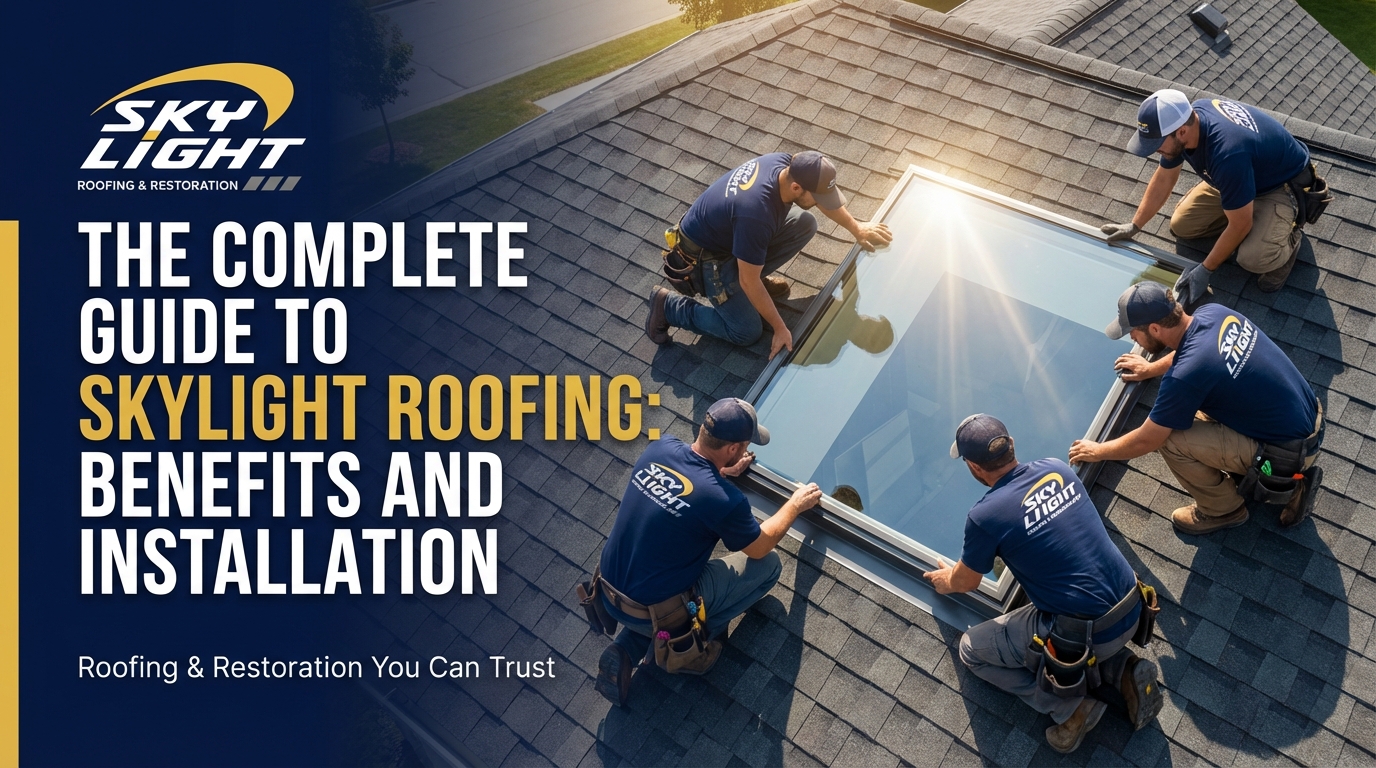
The Complete Guide to Skylight Roofing: Benefits and Installation
The Complete Guide to Skylight Roofing: Benefits and Installation
In the world of modern architecture and home renovation, few additions offer the transformative power of a professionally installed skylight. For homeowners across New Jersey, the decision to integrate "The Complete Guide to Skylight Roofing: Benefits and Installation" into their home improvement plans is often driven by a desire for more natural light, improved energy efficiency, and a connection to the outdoors. At Skylight Roofing & Restoration, we understand that a skylight is more than just a window in your roof; it is a sophisticated piece of engineering that must balance aesthetic beauty with structural integrity and weatherproofing. This guide serves as the definitive resource for understanding how skylights can revolutionize your living space while ensuring you have the technical knowledge to make an informed investment.
A skylight acts as a portal for daylight, reaching deep into the interior of a home where traditional windows often fail to provide adequate illumination. Whether you are dealing with a dark hallway, a gloomy kitchen, or a master bedroom that lacks a view, a skylight provides a constant stream of natural light that shifts with the passage of the sun. However, the process of selecting and installing these features requires a deep understanding of roofing systems, glazing technologies, and local climate challenges. From the heavy snow loads of Northern New Jersey to the humid summers of the coast, your skylight must be built to withstand the elements while providing a leak-free experience for decades to come.
This guide will walk you through everything from the psychological benefits of increased sunlight to the granular details of flashing techniques and smart home integration. We aim to demystify the installation process, helping you understand the difference between curb-mounted and deck-mounted units, and why the orientation of your roof determines the thermal performance of your new installation. By the end of this article, you will have a comprehensive understanding of why skylights are a premier choice for enhancing property value and quality of life.
1. Introduction: Why Skylights are a Game-Changer for Modern Homes
Modern home design has increasingly pivoted toward the concept of "biophilic design," which emphasizes the human need to connect with nature. Skylights are a cornerstone of this movement, offering a direct view of the sky and stars while flooding interiors with full-spectrum sunlight. For residents in the Northeast, where winters can be long and gray, the addition of a skylight provides a critical link to the outside world, significantly altering the atmosphere of a home. Unlike standard windows, which are often obstructed by trees, fences, or neighboring houses, skylights face upward toward the purest source of light available.
Beyond the aesthetic appeal, skylights solve functional problems that traditional windows cannot. They provide privacy in densely populated areas where opening a side window might mean looking directly into a neighbor’s living room. By placing the light source on the roof, you maintain your privacy while gaining superior illumination. Furthermore, skylights can make small rooms feel significantly larger by drawing the eye upward and breaking the visual ceiling plane. This sense of vertical space is a key factor in why homes with high-quality skylights often sell faster and for higher prices than those without.
At Skylight Roofing & Restoration, we see the installation of a skylight as an upgrade to the entire roofing system. It requires a harmonious blend of carpentry, roofing, and glazing expertise. When done correctly, a skylight is not a vulnerability to your roof; it is a high-performance component that enhances the home’s envelope. Throughout this guide, we will explore why choosing the right partner for this installation is just as important as the skylight itself, focusing on the craftsmanship and transparent communication that define our approach.
2. The Core Benefits: Beyond Just Natural Light (Health, Energy, Aesthetics)
Psychological and Physical Health Benefits
Exposure to natural light is scientifically proven to regulate our circadian rhythms, which are the internal clocks that tell our bodies when to sleep and when to be alert. By increasing the amount of natural light in your home, you are effectively supporting your body’s production of serotonin (the "feel-good" hormone) and Vitamin D. Many homeowners report a significant reduction in Seasonal Affective Disorder (SAD) symptoms after installing skylights. In workspaces or home offices, the presence of daylight has been linked to increased productivity and reduced eye strain compared to harsh fluorescent or LED lighting.
Aesthetic Transformation and Increased Home Value
From a design perspective, skylights offer a "wow factor" that is hard to replicate with other renovations. They highlight architectural features, brighten paint colors, and provide a changing tapestry of clouds and stars. From a real estate perspective, skylights are often viewed as a luxury feature. According to various home remodeling studies, well-maintained skylights can offer a return on investment (ROI) of up to 50-70% of the installation cost. They signal to potential buyers that the home is modern, well-ventilated, and thoughtfully designed to maximize comfort.
Improved Indoor Air Quality via Passive Ventilation
Venting skylights contribute to what is known as the "stack effect." As warm air rises, it naturally flows out through an open skylight, creating a vacuum that pulls cooler, fresher air in through lower windows. This passive ventilation reduces the reliance on air conditioning and helps expel indoor pollutants, cooking odors, and excess humidity. In areas like bathrooms and kitchens, where moisture buildup can lead to mold and mildew, a venting skylight is an invaluable tool for maintaining a healthy indoor environment and preserving the longevity of your interior finishes.
3. Understanding Your Options: Fixed vs. Vented vs. Tubular Skylights
Fixed Skylights: The Classic Choice
Fixed skylights are the most common type and are designed solely to provide light and a view. Because they do not open, they are inherently more leak-resistant and energy-efficient, as there are no moving parts or seals that can fail over time. Fixed skylights are ideal for high ceilings where manual operation would be difficult. They are typically the most budget-friendly option and are perfect for rooms where ventilation is already adequate but light is lacking. At Skylight Roofing & Restoration, we often recommend fixed units for large living areas where the primary goal is visual impact.
Vented Skylights: Airflow and Moisture Control
Vented skylights come in manual and electric (or solar-powered) versions. These units are essential for homeowners who want to improve their home’s air circulation. Electric and solar-powered models often include remote controls and rain sensors that automatically close the unit at the first sign of precipitation. Vented skylights are particularly beneficial in master suites and kitchens. While they are more expensive than fixed units, the added benefit of temperature control and humidity reduction often justifies the cost, especially in climates with significant seasonal temperature swings.
Tubular Skylights: Solutions for Small Spaces
Tubular skylights, also known as sun tunnels, are a brilliant solution for spaces where a traditional skylight won’t fit. They consist of a small dome on the roof that captures light and funnels it through a highly reflective tube to a diffuser in the ceiling. They are perfect for closets, hallways, and small bathrooms. Tubular skylights are easier to install because they don’t require major structural changes or a large light well. While they don’t provide a view of the sky, they provide an incredible amount of focused, natural light in areas that would otherwise be entirely dark.
4. Technical Selection: Curb-Mount vs. Deck-Mount and Glazing Technologies
Comparing Mounting Systems: Curb vs. Deck
The mounting method is one of the most critical technical decisions in skylight installation. Curb-mounted skylights sit on a wooden frame (the curb) built onto the roof deck. This raises the unit above the roof surface, which is excellent for preventing leaks in areas prone to snow and ice buildup. They offer more flexibility in sizing. Deck-mounted skylights, on the other hand, are nailed directly to the roof deck, providing a lower profile and a more integrated look. They are generally more energy-efficient because they sit flush with the roof, but they require a very precise opening and are most common in new construction or full roof replacements.
Advanced Glazing: Low-E Coatings and Argon Gas
Glazing technology has advanced significantly in recent years. Modern skylights utilize double or triple-paned tempered glass with Low-Emissivity (Low-E) coatings. These coatings reflect infrared light (heat) while allowing visible light to pass through. Additionally, many high-end units fill the space between glass panes with Argon gas, which provides superior insulation compared to air. This technology ensures that your skylight doesn’t become a "heat hole" in the winter or a "hot spot" in the summer. For safety, we always recommend laminated glass for the interior pane, which stays in place if the glass is ever broken.
Acoustic Performance: Noise Reduction for Urban Living
For homeowners living near busy roads, airports, or in bustling New Jersey neighborhoods, acoustic performance is a major consideration. Not all skylights are created equal when it comes to blocking out noise. Specialized acoustic glass utilizes varying thicknesses of glass and specialized interlayers to dampen sound waves. Choosing a skylight with a high STC (Sound Transmission Class) rating can reduce exterior noise by up to 50% compared to standard windows, ensuring that your light-filled oasis remains a quiet sanctuary regardless of what’s happening outside.
5. Pre-Installation Checklist: Assessing Roof Pitch, Materials, and Orientation
The Importance of Roof Pitch and Structural Integrity
Before cutting a hole in your roof, a professional inspection is mandatory. Your roof’s pitch (slope) determines the type of flashing kit required and the method of water shedding. Most standard skylights are designed for pitches between 15 and 85 degrees. Flat roofs require specific curb-mounted units to prevent water pooling. Additionally, we must assess your roof’s framing. Traditional rafter construction is relatively easy to work with, but engineered trusses cannot be cut without professional structural engineering approval, as they are under high tension and support the entire roof load.
Solar Orientation: North vs. South-Facing Placements
The direction your skylight faces dramatically affects its performance. North-facing skylights provide a soft, cool, and consistent light throughout the day without significant heat gain. South-facing skylights provide maximum heat gain in the winter but can lead to overheating in the summer if not properly shaded. East-facing skylights get intense morning sun, while west-facing units catch the hot afternoon rays. Understanding these dynamics allows us to recommend specific glazing tints or integrated blinds to manage the thermal comfort of your room effectively.
Material Compatibility and Weather Resistance
Your current roofing material—whether it be asphalt shingles, metal, tile, or slate—will dictate the type of flashing system needed. Flashing is the metal surround that directs water away from the skylight. At Skylight Roofing & Restoration, we use specialized kits designed for each specific material to ensure a seamless, waterproof transition. We also consider the impact of local weather patterns, such as the potential for ice damming in New Jersey. Proper insulation of the skylight shaft is just as important as the unit itself to prevent warm air from melting snow on the roof and causing leaks.
6. Step-by-Step Installation: From Cutting the Opening to Final Flashing
Preparation and Framing the Opening
The installation begins from the inside, marking the desired location and ensuring it is clear of electrical wires, plumbing, and HVAC ducts. Once the interior is prepped, we move to the roof. We remove the shingles around the area and cut the roof deck precisely to the dimensions of the skylight. Framing follows, where we add "headers" between the rafters to support the weight of the new unit and the surrounding roof. This structural work is the foundation of a long-lasting installation, ensuring that the roof remains strong despite the new opening.
Professional Flashing and Waterproofing Techniques
This is the most critical phase for leak prevention. Once the skylight is secured to the deck or curb, we apply a high-quality underlayment (ice and water shield) that wraps around the unit and extends onto the roof deck. Next comes the step-flashing, which involves overlapping metal pieces with each course of shingles. Finally, the counter-flashing or "saddle" flashing is installed at the top and bottom to divert water flow. Our team at Skylight Roofing & Restoration photo-documents this entire process, providing you with peace of mind that the "hidden" parts of the installation are done to the highest standards.
Finishing the Interior Light Well
The light well is the structural tunnel that connects the skylight to your ceiling. Depending on your home's architecture, this well can be straight, flared (wider at the bottom to spread light), or even curved. Proper insulation of the light well walls is essential to prevent condensation and energy loss. We finish the well with drywall, corner beads, and paint to match your existing ceiling. A well-designed light well can double the amount of visible light entering the room compared to a straight vertical shaft, making it a key design element in the overall project.
7. The Smart Edge: Integrating Skylights into Your Smart Home Ecosystem
Automated Rain Sensors and Motorized Venting
Modern skylights have entered the era of the Internet of Things (IoT). Brands like VELUX offer systems that integrate with Apple HomeKit, Google Assistant, and Amazon Alexa. These smart skylights utilize built-in sensors to monitor CO2 levels, humidity, and temperature. If the air in your home becomes stagnant or too humid, the skylight automatically opens to refresh the environment. Perhaps most importantly, integrated rain sensors detect the first drop of moisture and close the skylight immediately, protecting your hardwood floors and furniture even if you aren’t home.
App-Controlled Blinds and Dynamic Shading
Managing light levels is just as important as inviting light in. Smart skylights feature integrated blinds—available in blackout, light-filtering, or Venetian styles—that can be controlled via a smartphone app. You can schedule your blinds to open with your morning alarm or close during the hottest part of the day to reduce solar heat gain. Many of these systems are solar-powered, meaning they don’t require complex electrical wiring during installation and may even qualify you for federal tax credits for using renewable energy technology in your home.
8. Energy Efficiency & Climate Control: Managing Heat Gain and Loss
Understanding Solar Heat Gain Coefficient (SHGC)
Energy efficiency is a primary concern for New Jersey homeowners. When selecting a skylight, pay close attention to the U-Factor (which measures heat loss) and the Solar Heat Gain Coefficient (SHGC, which measures how much solar radiation enters). In our climate, you want a low U-factor to keep heat inside during the winter and a balanced SHGC to prevent the "greenhouse effect" in the summer. Choosing ENERGY STAR® certified skylights ensures that the unit meets strict efficiency guidelines tailored to the Northeast climate zone, helping you maintain a stable indoor temperature year-round.
Seasonal Maintenance for Different Climates
Climate-specific care is essential for maintaining efficiency. In cold regions, the main threat is ice damming, which occurs when heat escaping through an under-insulated skylight melts snow that then refreezes at the cold roof edge. Ensuring the light well is air-sealed and heavily insulated prevents this cycle. In more humid or tropical climates, the focus shifts to UV protection and humidity management. Advanced glass coatings can block up to 99% of UV rays, preventing your carpets and artwork from fading due to constant sun exposure. Regular checks of the weatherstripping ensure the unit remains airtight.
9. Long-Term Maintenance: Cleaning, Leak Prevention, and Troubleshooting
Preventing Ice Dams and Humidity Issues
A common misconception is that skylights always leak. In reality, most "leaks" are actually condensation issues caused by high indoor humidity hitting the cold glass surface. This is why proper ventilation is key. To prevent actual water intrusion, you should keep the exterior of the skylight clear of debris like leaves and pine needles, which can trap water against the flashing. During your annual roof inspection, have a professional check the condition of the sealants and the integrity of the flashing. At Skylight Roofing & Restoration, we offer maintenance plans that take the guesswork out of this upkeep.
Professional Inspections and Warranty Considerations
High-quality skylights come with extensive warranties, often covering the glass against seal failure for 20 years and the installation against leaks for 10 years. However, these warranties are often contingent on professional installation. Self-installing or hiring an unqualified contractor can void these protections. It is also important to use self-cleaning glass options when possible. These photocatalytic coatings use UV rays to break down organic dirt, which is then washed away by rain. This is especially useful for skylights in hard-to-reach areas where manual cleaning is dangerous or difficult.
10. Conclusion: Is a Skylight Right for Your Home? (Final ROI Analysis)
Deciding to install a skylight is a choice that balances luxury with practicality. When you weigh the benefits—increased natural light, better health outcomes, improved ventilation, and enhanced property value—against the costs, the return on investment is clear. A skylight doesn’t just change a room; it changes how you experience your home. However, the key to a successful project lies in the details: choosing the right glazing, ensuring structural integrity, and demanding a flawless installation process. As "The Complete Guide to Skylight Roofing: Benefits and Installation" has shown, knowledge is the first step toward a brighter home.
At Skylight Roofing & Restoration, we pride ourselves on being the experts New Jersey homeowners trust. We don’t just install windows in roofs; we provide engineered solutions tailored to your specific needs. Our commitment to craftsmanship, photo-documented inspections, and a no-pressure sales experience ensures that your journey from a dark room to a sun-drenched sanctuary is smooth and transparent. Whether you are looking for a simple sun tunnel or a bank of smart, automated venting skylights, we have the expertise to bring your vision to life with quality that lasts.
Ready to Get Started?
We provide complete home renovation services focused on craftsmanship, clean job sites, and clear communication, making the process simple and transparent through photo-documented inspections and a no-pressure experience.
Visit Our Homepage