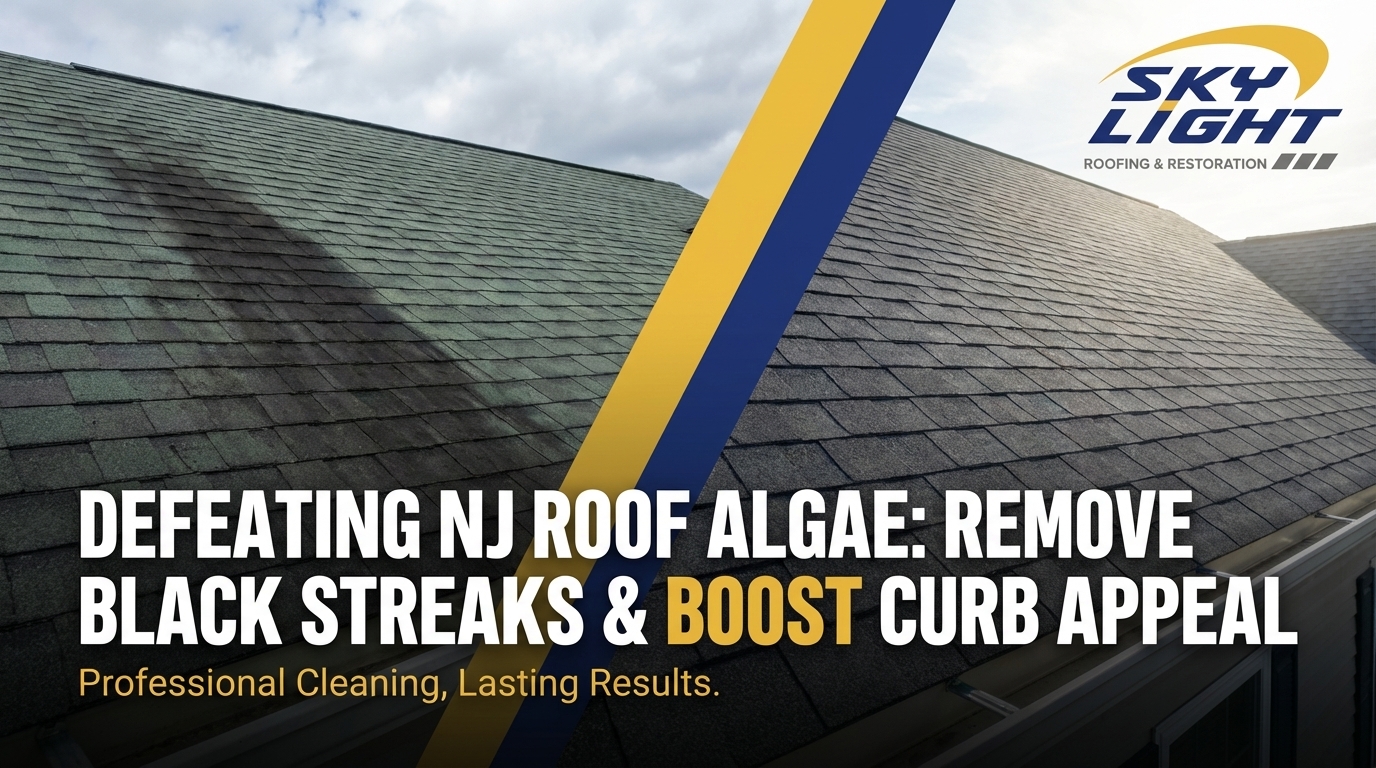
Defeating NJ Roof Algae: Remove Black Streaks & Boost Curb Appeal
Black Streaks & Curb Appeal: Defeating NJ Roof Algae for Good
If you have ever pulled into your driveway in New Jersey and noticed unsightly black streaks running down your roof, you are not alone. Many homeowners mistake these stains for soot, dirt, or even moss. However, the reality is more biological in nature. These streaks are caused by a hardy type of algae that is specifically adapted to thrive on asphalt shingles. While it might seem like a minor cosmetic issue, these black streaks can significantly diminish your home’s curb appeal and even lead to long-term structural damage if left untreated. In this comprehensive guide, we will explore what causes these streaks, how they impact your home’s value, and the professional methods required to eliminate them for good.
The primary culprit behind these dark discolorations is a cyanobacterium known as Gloeocapsa Magma. This organism thrives in the humid, temperate climate of the Garden State, finding a perfect breeding ground on the north-facing slopes of roofs where moisture lingers the longest. For NJ homeowners, maintaining a clean roof is not just about vanity; it is about protecting one of your most significant investments. From neighborhood HOA compliance to insurance policy mandates, the cleanliness of your roof plays a pivotal role in your home's overall health and legal standing.
What causes black streaks on NJ roofs?
Black streaks on New Jersey roofs are caused by Gloeocapsa Magma, a type of algae that feeds on the limestone filler in asphalt shingles. This growth is fueled by NJ's high humidity and shade. To defeat it for good, homeowners should use professional soft washing and install copper or zinc prevention strips.
1. The Battle for NJ Curb Appeal: Why First Impressions Matter
Curb appeal is the heartbeat of real estate value in New Jersey. Whether you live in the suburban stretches of Bergen County or the coastal towns of Monmouth County, the exterior of your home tells a story to neighbors and potential buyers alike. A roof covered in black streaks sends a subconscious message of neglect. Even if your lawn is manicured and your siding is spotless, a stained roof can make the entire property look aged and poorly maintained. Experts estimate that a dirty roof can decrease a home's perceived value by as much as 5% to 10% during a sale.
The Psychological Impact of Roof Stains
When people see black streaks, they often associate them with "mold" or "rot," even if the issue is technically algae. This creates a sense of urgency and fear for potential buyers, who may worry that the roof is nearing the end of its lifespan. In the competitive NJ real estate market, you want every advantage possible. A clean, uniform roof color suggests a home that has been cared for with attention to detail, giving buyers peace of mind and allowing you to command a higher asking price.
NJ Real Estate Trends and Maintenance
In recent years, NJ home inspectors have become increasingly diligent about noting biological growth on roofs. What was once considered a minor aesthetic flaw is now frequently flagged as a maintenance item that requires professional remediation before a closing can occur. By addressing roof algae early, you avoid last-minute hurdles during the home selling process and ensure that your property remains a beacon of quality in your neighborhood.

2. Identifying the Enemy: What Exactly is Gloeocapsa Magma?
Gloeocapsa Magma is a species of cyanobacteria that has become a widespread nuisance across North America, particularly in the Northeast. While often referred to as "blue-green algae," it protects itself from ultraviolet rays by developing a dark, pigment-rich outer coating. This coating is what creates the dreaded black streaks on your shingles. Unlike moss or lichen, which are more structural and "leafy," Gloeocapsa Magma is microscopic and spreads through airborne spores, making it easy for one infested roof to contaminate an entire neighborhood.
The Limestone Diet: Why Asphalt Shingles are Vulnerable
Modern asphalt shingles are not made of pure asphalt. To add weight and durability, manufacturers use limestone as a filler. Unfortunately, limestone is a primary food source for Gloeocapsa Magma. As the algae colonizes your roof, it literally eats away at the shingles, weakening the bond of the protective granules. Over time, this leads to premature granule loss, which exposes the underlying asphalt to the sun and weather, significantly shortening the lifespan of your roof.
How the Algae Spreads
The spread of roof algae is a slow but steady process. It usually begins on the north side of the house or under heavy tree cover where the roof stays damp the longest. As the colonies grow, they are washed down the roof by rainwater, creating the characteristic vertical streak pattern. If left untreated, the colonies will thicken, eventually creating a hospitable environment for more damaging organisms like moss and lichen, which can lift shingles and cause leaks.
3. The Hidden Costs of Black Streaks: Beyond Aesthetics
Many homeowners view black streaks as a purely cosmetic issue, but the financial implications go much deeper than appearances. One of the most significant hidden costs is related to energy efficiency. A healthy roof is designed to reflect sunlight, helping to keep your attic and home cool during the hot New Jersey summers. However, black algae acts like a heat sink. Because the streaks are dark, they absorb a massive amount of solar radiation, raising the temperature of your roof and, consequently, your cooling bills.
Thermal Absorption and Cooling Bills
In the peak of July, a roof covered in black algae can reach temperatures significantly higher than a clean roof. This heat is transferred through the roof deck and into your attic. Your air conditioning system then has to work overtime to combat this "thermal bridging." By removing the algae, you restore the reflective properties of your shingles, which can lead to measurable savings on your monthly energy expenditures.
Warranty Voidance and Shingle Degradation
Most major shingle manufacturers, such as GAF or Owens Corning, have specific maintenance requirements to keep their warranties valid. Allowing biological growth to take over your roof can sometimes be classified as "neglect." Furthermore, the physical degradation caused by the algae—such as the loss of protective granules—can lead to roof failure long before the 25- or 30-year expected lifespan. Replacing a roof early due to avoidable algae damage is a cost no homeowner wants to bear.
Heat Reflection High (Cooler Home) Low (Absorbs Heat) Shingle Life Full Potential Prematurely Reduced Property Value Maintained/Increased Decreased (5-10%)4. Why NJ Roofs are Ground Zero: Humidity and Shady Maples
New Jersey presents a unique set of environmental challenges that make it a paradise for roof algae. Our state experiences four distinct seasons, but it is the humid summers and wet springs that really drive algae growth. The high humidity levels in areas like the Passaic Valley or near the Jersey Shore provide the constant moisture that Gloeocapsa Magma needs to thrive. Additionally, New Jersey's rich canopy of deciduous trees—especially our iconic Maples—contributes to the problem.
The Role of NJ's Tree Canopy
While we love the shade our trees provide, they also prevent roofs from drying out quickly after a rainstorm. Overhanging branches drop organic debris like leaves and pollen onto the shingles, which trap moisture and provide additional nutrients for the algae. If you live in a heavily wooded area of NJ, such as Morris or Sussex County, you may notice that your roof develops black streaks much faster than homes in more open, sun-exposed developments.
Coastal Air and Salt Considerations
For those living along the Jersey Shore, the salt air and high coastal humidity create a specialized microclimate. While salt can actually inhibit some types of plant growth, the specific moisture levels and lack of heavy frost in coastal regions can allow algae to stay active for longer periods throughout the year. Understanding these local factors is key to developing a long-term maintenance strategy that works for your specific geography.
5. Soft Washing: The Only ARMA-Approved Way to Clean NJ Shingles
When homeowners decide to tackle black streaks, many make the mistake of reaching for a pressure washer. This is a critical error. The Asphalt Roofing Manufacturers Association (ARMA) specifically warns against using high-pressure water on asphalt shingles. Pressure washing can blast away the protective granules, damage the shingles, and even force water under the roof deck, leading to leaks and mold inside the home. The professional solution is a process called Soft Washing.
What is Soft Washing?
Soft washing is a cleaning method that uses low-pressure pumps (about the same pressure as a garden hose) to apply a specialized chemical solution to the roof. This solution typically consists of a biodegradable surfactant and a sanitizing agent. The chemicals do the heavy lifting, killing the algae, moss, and lichen at their roots rather than just shearing off the surface layer. This ensures that the biological growth is actually dead and won't simply grow back in a few months.
The Soft Wash Process Step-by-Step
- Inspection: A professional assesses the roof's condition and identifies the most heavily infested areas.
- Protection: Landscaping and plants are wetted down and covered to prevent chemical damage.
- Application: The cleaning solution is gently sprayed onto the shingles.
- Dwell Time: The solution sits on the roof for 15-20 minutes to penetrate the algae colonies.
- Rinse: If necessary, the roof is rinsed with low-pressure water, though many modern solutions are designed to be cleared by the next rainstorm.
6. The 'For Good' Strategy: Long-Term Algae Prevention
Cleaning your roof is a great first step, but the goal for most NJ homeowners is to prevent the black streaks from ever returning. There are several proactive strategies that can help you achieve an algae-free roof for years to come. The most effective long-term solutions involve the use of metals like copper and zinc, which are naturally toxic to algae but harmless to your shingles and the environment.
Copper and Zinc Strips
Installing zinc or copper strips along the ridge of your roof is a time-tested prevention method. Every time it rains, a small amount of metal ions is washed down the roof. These ions create an environment where Gloeocapsa Magma cannot survive. While this won't clean an existing mess, it is an excellent way to keep a clean roof looking new. Copper is generally more effective than zinc but is also more expensive. For the best results, these strips should be installed professionally to ensure they are properly integrated with your ridge vents and shingles.
Algae-Resistant (AR) Shingles
If you are planning a roof replacement, look for "Algae-Resistant" or "StainGuard" shingles. These products have copper-infused granules embedded directly into the asphalt during the manufacturing process. High-end options, such as those featuring 3M Scotchgard Protector, offer multi-decade warranties against black streaks. This is often the most cost-effective way to handle the problem in the long run, as it eliminates the need for periodic cleaning services.
7. Safety First: Protecting Your NJ Landscape and Family
One of the biggest concerns homeowners have with professional roof cleaning is the impact of chemicals on their property. In New Jersey, where many of us take great pride in our landscaping and gardens, protecting your plants is paramount. Professional soft washing companies use specific protocols to ensure that the cleaning agents only target the roof and do not harm your lawn, shrubs, or pets.
Landscape Protection Protocols
A reputable contractor will always perform a thorough pre-soak of all vegetation surrounding the home. Wetting the leaves allows the cleaning solution to slide off rather than being absorbed by the plant. During the application process, a second crew member often stands on the ground with a hose to provide a continuous rinse of the foliage. In some cases, specialized "neutralizers" are applied to the soil after the job to balance the pH levels and ensure your garden continues to thrive.
NJ Environmental Regulations and Runoff
New Jersey has strict regulations regarding chemical runoff into storm drains. Professional roofing companies are trained to manage runoff according to EPA and local NJ DEP standards. This may involve using collection systems or ensuring that all solutions are properly diluted before they leave your property. Using a licensed and insured NJ professional ensures that you stay compliant with local environmental laws while achieving a clean home.
8. NJ Homeowner’s Guide: Dealing with HOAs and Insurance Policies
In New Jersey, your roof is not just your concern; it's also the concern of your Homeowners Association (HOA) and your insurance provider. Many NJ HOAs have strict bylaws regarding the appearance of homes, and black streaks are a frequent target for violation notices. If you receive a letter from your HOA, it's important to act quickly to avoid fines. Providing them with a contract for a professional soft wash is usually enough to resolve the issue and maintain your standing in the community.
Insurance Implications of Roof Growth
Perhaps more critical is the trend of insurance companies using drones to inspect properties. Many NJ homeowners have recently reported receiving non-renewal notices or cancellation threats due to "biological growth" on their roofs. Insurers view algae and moss as signs of a poorly maintained roof that is more likely to leak or fail during a storm. Cleaning your roof is no longer just about aesthetics—it is a necessary step to keep your homeowners insurance policy active and affordable.
Seasonal Timing: When to Clean in NJ
The best time to clean your roof in New Jersey is during the late spring or early fall. In the spring, you want to wait until after the heavy pollen drop has finished, as pollen can create a sticky "seal" that makes cleaning less effective. Fall is also an excellent time, as it prepares the roof for the winter freeze-thaw cycles. Avoid cleaning in the dead of winter, as frozen shingles can be brittle and the cleaning solutions are less effective in freezing temperatures.
Conclusion: Restoring Your Home’s Value and Peace of Mind
Defeating black streaks on your New Jersey roof is about more than just a weekend project; it’s about comprehensive home preservation. By understanding that those stains are caused by a living organism like Gloeocapsa Magma, you can make informed decisions about how to treat them. Avoiding the temptation of high-pressure washing and opting for professional soft washing will protect your shingles and ensure a long-lasting result. Furthermore, being proactive with copper strips or algae-resistant shingles can save you thousands of dollars in energy costs and premature roof replacement.
Ultimately, a clean roof provides peace of mind. You won’t have to worry about HOA letters, insurance cancellations, or the embarrassment of a dingy-looking home. At Skylight Roofing & Restoration, we believe that every New Jersey homeowner deserves a roof that is as functional as it is beautiful. Whether you are dealing with the first signs of black streaks or need a full restoration, taking action now will restore your curb appeal and protect your home for years to come.
Ready to Get Started?
We provide complete home renovation services focused on craftsmanship, clean job sites, and clear communication, making the process simple and transparent through photo-documented inspections and a no-pressure experience.
Visit Our Homepage