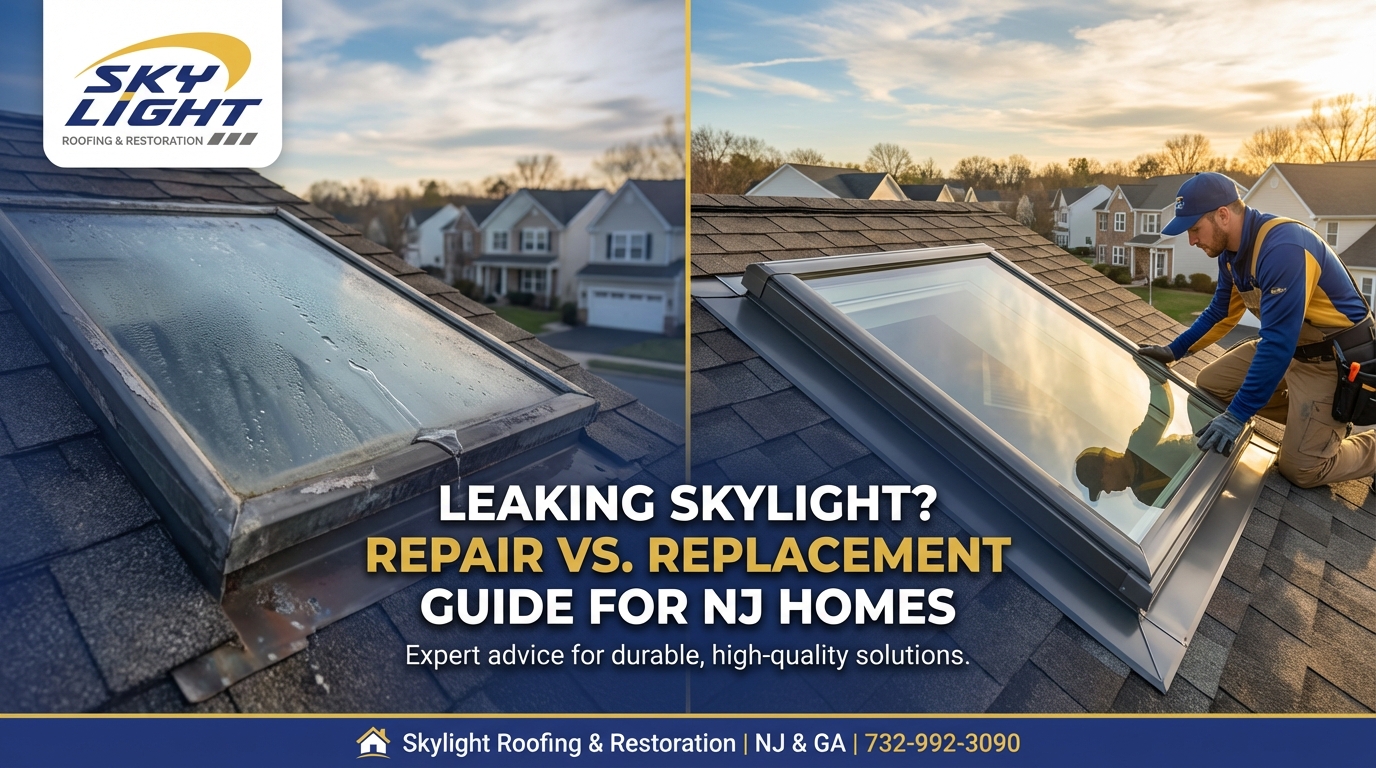
Leaking Skylight? Repair vs. Replacement Guide for NJ Homes
Leaking Skylight? Repair vs. Replacement Guide for NJ Homes
Finding a puddle on your hardwood floors after a classic New Jersey Nor’easter is a homeowner’s nightmare. When your skylight begins to fail, the immediate question isn’t just how to fix it, but whether a simple repair is a sustainable solution or just a temporary bandage on a larger problem. For New Jersey residents, the decision to repair or replace a leaking skylight is complicated by our state’s extreme weather cycles, ranging from humid summers to heavy winter snow loads. At Skylight Roofing & Restoration, we believe in providing the professional clarity you need to protect your home without unnecessary pressure.
Direct Answer: Generally, if your skylight is under 10 years old and the leak is caused by damaged flashing or a minor sealant issue, a repair is cost-effective. However, if the unit is over 15 years old, shows signs of seal failure (fogging), or has structural frame damage, a full replacement is recommended. In New Jersey, the cost of labor often makes replacement a better long-term ROI when compared to frequent, recurring repairs.
1. Signs of Trouble: Is Your Skylight Leaking or is it NJ Humidity?
Distinguishing Between Condensation and Leaks
In many New Jersey homes, particularly those with high vaulted ceilings in kitchens or bathrooms, what looks like a leak might actually be heavy condensation. During our cold winters, the warm, moist air inside your home rises and hits the cold surface of the skylight glass. This results in water droplets that can pool and drip, mimicking a roof leak. If you notice moisture primarily on very cold mornings that clears up as the sun hits the glass, you likely have a ventilation issue rather than a structural failure. Improving your home’s attic ventilation or using a dehumidifier can often resolve this without touching the skylight itself.
Identifying Flashing and Seal Failure
True leaks usually manifest during or immediately after rainfall. The most common culprit is the flashing—the metal transition piece that directs water around the skylight. Over time, NJ’s freeze-thaw cycles cause the roof materials to expand and contract, which can pull the flashing away from the curb. Additionally, check for "fogging" between the panes of glass. This indicates that the factory seal has failed, allowing argon gas to escape and moisture to enter. Once a seal is blown, the insulating properties are gone, and a leak is often not far behind.
Structural Damage and Cracked Frames
Visible cracks in the glass or the acrylic dome are immediate red flags that require urgent attention. Beyond the glass, the interior frame of the skylight should be inspected for discoloration, bubbling paint, or soft wood. These are signs that water has been seeping into the drywall or the rafters for some time. In the Garden State, where heavy snow can sit on a roof for weeks, even a tiny hairline crack can be forced open by the weight and moisture of an ice dam, leading to significant interior damage.
2. The Decision Matrix: When to Repair vs. Full Replacement
The 50% Rule for Skylight Repairs
A standard rule of thumb used by professional contractors is the 50% rule: if the cost of the repair exceeds 50% of the cost of a new skylight installation, replacement is the smarter financial move. In NJ, labor is often the most significant portion of the bill. If a technician has to spend four hours dismantling the surrounding shingles and flashing to fix a minor leak on a 12-year-old unit, you are paying for labor that will likely be repeated in a few years when the glass seal eventually fails. It is often more economical to put that labor cost toward a brand-new, warrantied unit.
Assessing the Scope of the Leak
Repair is a viable option when the issue is localized and the unit itself is in good health. For example, if a branch fell and damaged a small section of flashing, or if a piece of sealant has dried out and cracked, these are straightforward fixes. However, if water is entering from multiple points or if the leak has caused rot in the surrounding roof deck, a "simple repair" often turns into a much larger project. In these cases, pulling up the surrounding roofing material to perform a proper replacement ensures the structural integrity of your home.
Warranty Considerations
Before deciding, check if your current skylight is still under warranty. Major manufacturers like VELUX often offer 10 to 20-year warranties on glass seals and parts. If you are within that window, a repair might be covered by the manufacturer. Conversely, a new installation typically comes with a "No Leak" warranty that covers both the product and the labor for 10 years or more. Choosing replacement gives you a fresh start and the peace of mind that you won’t be dealing with the same drip during next year’s storm season.
3. The 15-Year Rule: Why Age Matters More Than Appearance in NJ
The Lifecycle of a Modern Skylight
While a skylight might look perfectly fine from your living room, the exterior components have a finite lifespan. Most high-quality skylights are designed to last between 15 and 20 years. Once a unit hits the 15-year mark, the specialized rubber gaskets and sealants begin to lose their elasticity. In New Jersey, where temperatures can swing from 100°F in July to sub-zero in January, these materials degrade faster than they might in more temperate climates. An old skylight is essentially a ticking time bomb for your ceiling.
Technological Advancements in Glass
If your skylight was installed in the early 2000s or before, it is likely using outdated glass technology. Modern skylights feature Neat® glass, which stays cleaner longer and significantly reduces exterior noise. More importantly, newer units offer much better UV protection, preventing your NJ home’s furniture and flooring from fading. If you are paying for a repair on an old unit, you are essentially investing in obsolete technology that is costing you money in energy loss every single day.
Matching Your Roof’s Lifespan
One of the most critical factors for NJ homeowners is the age of the roof itself. If you are planning a roof replacement in the next 3-5 years, it is almost always recommended to replace the skylight at the same time. Installing a new roof around an old skylight is a recipe for disaster, as the old seals are often disturbed during the roofing process. Conversely, if your roof is brand new and the skylight starts leaking, you may want to attempt a repair first to avoid disturbing the newly installed shingles.
4. NJ Price Guide: 2025/2026 Costs for Repairs vs. New Installations
Minor Flashing Repair $450 - $900 Small leak, unit < 10 years old Glass Replacement Only $800 - $1,500 Broken glass on a newer frame Standard Replacement $2,200 - $4,500 Unit > 15 years, leaking or fogging New Structural Cut-In $5,000 - $8,500+ Adding a skylight where none existsIn New Jersey, pricing varies based on your county. For instance, labor rates in Bergen or Monmouth counties may be higher than in South Jersey. These estimates typically include the cost of the unit, professional installation, flashing kits, and debris removal. Keep in mind that structural issues, such as repairing rotted rafters or replacing large sections of water-damaged drywall, can add significantly to these totals. At Skylight Roofing & Restoration, we provide transparent, itemized quotes so you know exactly where your investment is going.
Don't forget the hidden costs of "cheap" repairs. A $300 tube-of-caulk fix from a handyman might stop the drip for a month, but it often traps moisture against the wood frame, leading to mold and rot that costs thousands to remediate later. When it comes to the envelope of your home, professional-grade flashing and proper ice and water shield membranes are non-negotiable for long-term protection.
5. The NJ Weather Factor: Surviving Nor’easters, Heavy Snow, and Ice Dams
The Impact of Wind-Driven Rain
New Jersey is famous for its Nor’easters, which bring horizontal, wind-driven rain that can find its way into the smallest gaps. Standard skylight installations that might work in a milder climate often fail here because they don’t account for the pressure these storms exert. For NJ homes, we recommend a "triple protection" approach: high-quality flashing, adhesive underlayment (ice and water shield) that wraps up the skylight curb, and a secondary gasket seal. This ensures that even when the wind is howling at 60 mph, water stays outside where it belongs.
Ice Dams and Skylight Integrity
Snow buildup on a skylight can be beautiful, but it’s also heavy and dangerous. As heat escapes through an older, poorly insulated skylight, it melts the bottom layer of snow. This water then runs down to the colder edge of the roof and freezes, creating an ice dam. This dam backs up water directly under your skylight shingles and flashing. Only a modern, Energy Star-rated skylight with proper curb insulation can effectively minimize the heat loss that causes these dams. If your skylight is prone to leaking specifically during the winter thaw, ice damming is the likely culprit.
Coastal NJ and Salt Air Corrosion
For our clients in Monmouth and Ocean counties, the salt air is a major factor in skylight degradation. Salt is highly corrosive to standard metal hardware and can eat away at lower-grade flashing materials over time. If you live within five miles of the Jersey Shore, we recommend stainless steel or specialized coated hardware and regular inspections to ensure that salt buildup isn’t compromising the mechanical parts of venting skylights. This unique environmental factor often moves the replacement timeline up by 3-5 years compared to inland NJ homes.
6. Building Codes & Permits: Navigating NJ Uniform Construction Code (UCC)
When is a Permit Required in NJ?
Many NJ homeowners are surprised to learn that skylight work often requires a permit from their local municipality. Under the NJ Uniform Construction Code (UCC), a "like-for-like" replacement (where you replace a skylight with one of the exact same size in the same location) is often classified as a minor repair and may not require a full construction permit in some townships. However, if you are cutting new rafters, enlarging the opening, or changing the structural footprint of the roof, a permit and subsequent inspections are mandatory. Always check with your local building department in towns like Toms River, Cherry Hill, or Paramus, as local amendments can vary.
Compliance with Energy Codes
New Jersey has adopted rigorous energy efficiency standards. When replacing a skylight, the new unit must meet specific U-factor and Solar Heat Gain Coefficient (SHGC) ratings for Climate Zone 4 or 5, depending on your county. Installing a non-compliant unit can result in a failed inspection and may complicate the sale of your home in the future. Working with a specialist like Skylight Roofing & Restoration ensures that your new installation meets all current NJ state codes, protecting your property value and ensuring legal compliance.
The Importance of Professional Documentation
Whether you are repairing or replacing, keeping detailed documentation is vital for New Jersey homeowners. This includes photos of the flashing, the underlying roof deck, and the final seal. Should you decide to sell your home, having a documented history of professional skylight maintenance and code-compliant replacement provides buyers with confidence. We provide all our NJ clients with photo-documented inspections, which are invaluable for both real estate disclosures and future warranty claims.
7. Energy Efficiency & ROI: Why Modern Glass Pays Off in NJ Climate Zones
Reducing the "Hot Box" Effect in Summer
In July and August, an old skylight can act like a magnifying glass, turning your living room into a "hot box" and forcing your air conditioner to work overtime. Modern Low-E (low-emissivity) coatings are designed to reflect infrared light while letting in visible light. This means you get the brightness you love without the heat gain. For NJ homeowners, switching from an old plastic bubble or single-pane glass unit to a modern dual-pane Low-E skylight can reduce cooling costs by as much as 15-20% during the summer months.
Federal Tax Credits for "Solar-Ready" NJ Homes
One of the biggest financial incentives for NJ residents is the Federal Investment Tax Credit (ITC). If you choose to install a solar-powered "Fresh Air" skylight or a skylight equipped with solar-powered blinds, the entire project (including labor!) may qualify for a 30% federal tax credit. Because New Jersey is a state with high electricity costs and aggressive solar initiatives, this credit makes a high-end, solar-powered replacement significantly more affordable than a standard manual unit. It’s one of the few home improvements that essentially pays for a third of itself through tax savings.
Enhancing Resale Value and Curb Appeal
A leaking, stained, or foggy skylight is a major red flag for home inspectors during a NJ real estate transaction. It suggests broader neglect of the roof and can lead to buyers demanding steep credits at closing. Conversely, a modern, sleek skylight is a luxury feature that adds aesthetic value and interior light that makes spaces feel larger. When you consider the energy savings, the tax credits, and the boost to your home’s resale value, the ROI on a skylight replacement often far outweighs the temporary savings of a patch-job repair.
8. Storm Damage & Insurance: How to Handle NJ Weather Claims
Documenting Damage After a NJ Storm
If your skylight leak appeared suddenly after a hail storm or a severe Nor’easter with fallen debris, it may be covered by your homeowners insurance. The key to a successful claim in NJ is immediate documentation. Take clear photos of the damage from both inside and outside (if safe). Look for cracks in the glass, dents in the metal flashing, or missing shingles around the unit. At Skylight Roofing & Restoration, we specialize in helping homeowners navigate the insurance process by providing professional, photo-supported damage assessments that adjusters can use to process your claim accurately.
Sudden vs. Gradual Damage
It is important to understand that insurance typically covers "sudden and accidental" damage, such as a tree limb hitting the skylight. It generally does not cover gradual wear and tear or maintenance issues, like a seal failing due to age. However, many NJ policies have "matching" clauses or provisions that might cover a full replacement if a repair would result in an inconsistent look with the rest of the roof. Understanding the specific language of your policy is essential, and our team can help you identify if your skylight issue qualifies for a claim.
Working with a Restoration Specialist
When dealing with insurance, don’t just hire a general handyman. You need a contractor who understands how to interface with insurance companies and who can provide the detailed estimates they require. We ensure that all necessary components—such as ice and water shields, specialized flashing, and interior trim work—are included in the scope of work so you aren’t left paying out of pocket for items the insurance company should have covered. Our goal is to return your home to its pre-storm condition (or better) with as little stress as possible.
9. Conclusion: Hiring a Local NJ Skylight Specialist vs. General Roofer
Skylights are one of the most technically demanding parts of a home’s exterior. While many general roofers can hammer down shingles, they often lack the specialized training required to properly seal and insulate a skylight curb. A "cheap" roofing job is often where future skylight leaks begin. By choosing a specialist, you are ensuring that the integration between your roof and your skylight is seamless and weather-tight. In New Jersey’s demanding climate, that expertise is the difference between a dry home and a recurring headache.
At Skylight Roofing & Restoration, we pride ourselves on a no-pressure, transparent experience. We don’t just tell you that you need a replacement; we show you why through detailed photos and clear communication. Whether you need a small repair to get through the season or a full, energy-efficient upgrade, our team is dedicated to craftsmanship and property respect. Don’t let a small drip turn into a major restoration project—get the professional guidance you deserve.
Ready to Get Started?
We provide complete home renovation services focused on craftsmanship, clean job sites, and clear communication, making the process simple and transparent through photo-documented inspections and a no-pressure experience.
Visit Our Homepage