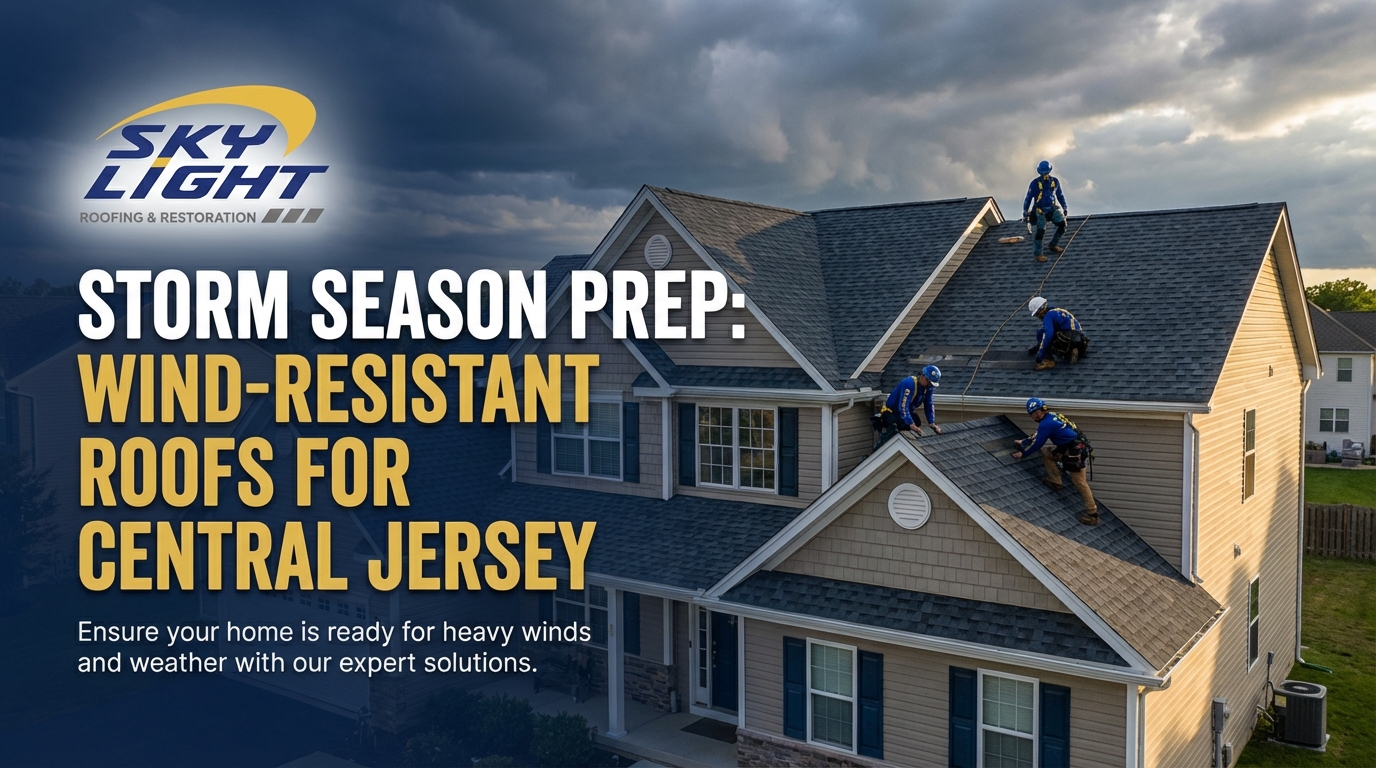
Storm Season Prep: Wind-Resistant Roofs For Central Jersey
Living in Central Jersey means experiencing the full spectrum of Mid-Atlantic weather, from the humid microbursts of a July afternoon to the relentless, salt-heavy winds of a winter Nor’easter. As storm seasons become increasingly unpredictable, the integrity of your home’s first line of defense—the roof—is more critical than ever. Whether you reside in the suburban stretches of Somerset County or the wind-swept corridors of Monmouth, preparing your property for high-velocity winds and torrential rain is not just a maintenance task; it is an investment in your family’s safety and your home’s long-term value.
How do you prepare a roof for Central Jersey storm seasons? To protect your home, you must verify your roof has a high wind-uplift rating (ideally 110-130 mph), ensure all gutters and downspouts are clear, trim overhanging tree branches, and inspect flashing for watertight seals. Upgrading to Class 4 impact-resistant architectural shingles or standing-seam metal roofing offers the best defense against regional storm patterns.
1. Why Central Jersey Homeowners Face Unique Storm Risks
Central New Jersey occupies a unique geographic position that exposes it to a variety of meteorological threats. Unlike the consistently coastal regions of the South or the inland plains of the Midwest, Central Jersey acts as a transition zone. Homeowners in Mercer and Somerset counties often deal with "Inland Microbursts"—sudden, localized windstorms that can reach speeds of 70 mph, snapping older tree limbs and lifting loose shingles. Meanwhile, residents closer to the Monmouth County border must contend with the corrosive effects of salt air combined with the high-velocity gusts of Atlantic-born Nor’easters.
Furthermore, the "Micro-Climate" factor in Central Jersey cannot be ignored. Our region features a mix of dense suburban developments and wide-open rural farm areas. In newer developments, closely packed houses can create a "wind tunnel" effect, accelerating gusts between buildings and putting extreme pressure on roof edges and gables. In contrast, rural areas in towns like Hillsborough or Hopewell leave homes exposed to unobstructed winds that can travel for miles before hitting a structure. Understanding these local nuances is the first step in tailoring your storm preparation strategy.
Historically, storms like Superstorm Sandy and Hurricane Ida have redefined how we think about roofing resilience in the Garden State. It is no longer enough for a roof to simply look good; it must be engineered to withstand the specific pressure differentials created by these modern weather events. This means moving beyond standard building codes and looking toward "Best-in-Class" materials and installation techniques that prioritize wind resistance and water management.
2. Evaluating Your Current Roof: Wind Resistance 101
Before you can reinforce your home, you must understand the mechanics of how wind damages a roof. The primary culprit is a phenomenon known as "Wind Uplift." As high-speed air flows over the peak of your roof, it creates a zone of low pressure, similar to how an airplane wing generates lift. If your roofing materials are not properly secured, this pressure differential can literally pull shingles off the deck or, in extreme cases, lift the entire roof structure away from the walls. This is why the perimeter of your roof—the eaves and rakes—is the most vulnerable area during a Central Jersey storm.
Evaluating your roof starts with a visual age assessment. Most standard 3-tab shingles are only rated for winds up to 60 or 70 mph. If your roof is more than 15 years old, the adhesive strips that seal the shingles together may have dried out or become brittle. Once that seal is broken, even a moderate gust can catch the edge of a shingle, causing it to flap and eventually tear away. During your evaluation, look for "tabs" that are curled, buckled, or showing significant granule loss, as these are clear indicators that the shingle’s structural integrity has been compromised.
Another critical factor is the "Class" rating of your current system. In the roofing industry, wind resistance is often measured by UL (Underwriters Laboratories) standards. A roof with a UL 2218 Class 4 rating is considered the gold standard for impact resistance, while wind ratings are typically labeled as Class F (up to 110 mph) or Class H (up to 150 mph). If you aren’t sure what your current roof is rated for, a professional inspection can identify the specific material and its remaining lifespan, giving you a baseline for your storm-prep needs.
Signs of Storm Vulnerability
- Exposed Nail Heads: These are entry points for water and indicate the shingle may have shifted.
- Damaged Fascia and Soffits: If these peripheral components are rotting, wind can easily get under the roof deck.
- Cracked Sealants: Check the caulking around chimneys and skylights; if it’s cracked, wind-driven rain will find its way in.
3. Top-Tier Materials: Comparing Metal, Slate, and Architectural Shingles for NJ Weather
When it comes to selecting new materials for a Central Jersey home, the debate usually centers on three contenders: architectural shingles, metal roofing, and synthetic slate. Architectural (or laminated) shingles are the most popular choice for local homeowners. Unlike flat 3-tab shingles, architectural shingles are multi-layered and much heavier. This extra mass, combined with high-performance starter strips, allows them to achieve wind ratings of 130 mph or higher. For most suburban neighborhoods in Somerset or Mercer, this provides an excellent balance of cost and performance.
Metal roofing, specifically standing-seam systems, is the undisputed king of wind resistance. Because the panels are mechanically fastened and interlocked, there are no loose edges for the wind to catch. Metal roofs are often rated for winds exceeding 140 mph, making them ideal for coastal-adjacent areas like Middletown or Manalapan. While the initial investment is higher, the longevity (50+ years) and the virtual immunity to wind-driven rain make it a top-tier choice for those planning to stay in their homes for decades. Additionally, metal is fire-resistant, which can be a secondary benefit in more wooded Central Jersey towns.
Synthetic slate and wood shake options have also gained traction recently. These materials offer the aesthetic of a historic Princeton estate but with modern engineering. Many synthetic slate products carry a Class 4 impact rating, meaning they can withstand large hailstones that would shatter natural slate. They are also significantly lighter than natural stone, reducing the structural load on your home while maintaining high wind-uplift resistance. For homeowners looking to maintain architectural integrity while maximizing storm defense, this is a compelling middle ground.
3-Tab Shingles 60-70 MPH Low 15-20 Years Architectural Shingles 110-130 MPH High (Class 3/4) 25-30 Years Standing Seam Metal 140+ MPH Excellent 50+ Years4. Pre-Season Maintenance: The Essential 5-Point Checklist
Even the best roofing materials can fail if they aren’t supported by proper maintenance. The first item on your checklist should be gutter cleaning and downspout extensions. During a Central Jersey microburst, your roof may be tasked with shedding thousands of gallons of water in under an hour. If your gutters are clogged with leaves from last autumn, that water will back up under your shingles, leading to rot in the fascia board and potential leaks in your attic. Ensure your downspouts extend at least 5-10 feet away from your foundation to prevent soil saturation and basement flooding.
The second point is tree management. Central Jersey is known for its beautiful canopy of oaks and maples, but these are the primary cause of roof damage during storms. Any branch within 6 to 10 feet of your roofline should be trimmed back. In a high-wind event, these branches act as hammers, repeatedly striking the shingles and scraping away the protective granule layer. Furthermore, overhanging limbs provide a "bridge" for moisture and pests, accelerating the decay of your roofing materials over time.
Third, inspect your flashing and seals. Flashing is the metal material installed around chimneys, vents, and valleys—the areas where your roof is most likely to leak. Over time, the sealant around these penetrations can dry out and crack. A pre-season check ensures that these critical transition points are watertight. Fourth, check your attic ventilation. Proper airflow regulates the temperature and pressure in your attic; if the air can’t circulate, it can create internal pressure that contributes to roof uplift during a storm. Finally, document everything. Take high-resolution "Before" photos of your roof from multiple angles. This simple step is invaluable if you ever need to file an insurance claim after a major storm.
The 5-Point Maintenance Summary
- Gutters: Clear debris and ensure proper pitch for drainage.
- Trees: Trim limbs 10 feet back from the roof edge.
- Flashing: Inspect metal transitions and re-seal if necessary.
- Ventilation: Ensure soffit and ridge vents are unobstructed.
- Documentation: Take dated photos of the entire roof surface.
5. Advanced Reinforcements: Hurricane Straps and Secondary Water Barriers
For homeowners looking for maximum protection, "Advanced Reinforcements" go beyond the surface of the shingles. Hurricane straps (or clips) are galvanized steel connectors that tie the roof rafters directly to the wall studs of the home. While these are now standard in new New Jersey construction, many older homes in Central Jersey lack this structural connection. Retrofitting hurricane straps can significantly increase your roof’s resistance to being uplifted during extreme wind events. This is often a recommended upgrade for homes in high-wind zones or those with steep, exposed gables.
Another critical layer of defense is the installation of a secondary water barrier. Traditional roofing uses organic felt paper as an underlayment, which can easily tear or rot if exposed to water. Modern systems utilize synthetic underlayment, which is much stronger and provides a watertight seal even if shingles are blown away. Additionally, an "Ice and Water Shield"—a self-adhering bituminous membrane—should be installed at the eaves, valleys, and around all penetrations. This prevents wind-driven rain from being pushed upward under the shingles and into your home.
Finally, consider the role of the "Starter Strip." Many budget-conscious installations skip the dedicated starter shingle, instead using a standard shingle turned upside down. This is a major mistake in storm-prone regions. A true starter strip, like those provided in GAF Roofing Systems, has a specialized adhesive strip at the very edge of the eave. This locks down the first course of shingles, preventing the wind from getting a "foothold" at the roof's edge. Without a proper starter strip, your entire roof is at risk of a domino-effect failure.
6. The Local Advantage: Navigating Central Jersey Permits and Codes
One often overlooked aspect of storm preparation is the legal and regulatory landscape of Central Jersey. New Jersey follows the International Building Code (IBC) with specific state-level amendments (N.J.A.C. 5:23). However, individual townships like Princeton, Franklin, or Middletown may have additional requirements regarding wind load calculations and permit documentation. For instance, if you live in a designated high-wind zone near the coast, the municipality may require specific fastening patterns (using 6 nails per shingle instead of the standard 4) to ensure the roof meets local resilience standards.
Navigating these permits can be a headache for homeowners, which is why working with a local contractor who understands the specific nuances of Somerset, Mercer, and Monmouth counties is essential. A professional contractor like Skylight Roofing & Restoration handles the permit process for you, ensuring that your new roof isn’t just strong, but also fully compliant with local law. This compliance is critical if you ever decide to sell your home, as unpermitted roofing work can be a major red flag during a home inspection.
Moreover, there is a financial benefit to these local code upgrades. Many New Jersey insurance providers offer significant discounts on premiums for homeowners who can prove their roof meets certain wind-resistance standards (such as the FORTIFIED Home™ standard). In some cases, these savings can offset the cost of the roofing upgrade within a few years. Be sure to ask your contractor for a "Certificate of Completion" and any manufacturer-specific documentation to provide to your insurance agent.
7. Choosing a GAF-Certified Central Jersey Contractor
The best materials in the world will fail if they are improperly installed. This is particularly true for wind-resistant systems where every nail and adhesive strip must be perfectly placed. Choosing a GAF-Certified or CertainTeed-Certified contractor is the most reliable way to ensure quality. These certifications aren’t just badges; they require contractors to undergo rigorous training, maintain high levels of insurance, and prove a track record of customer satisfaction. Because these manufacturers trust their certified installers, they allow them to offer extended warranties that cover both materials and labor—something a non-certified "trunk slammer" cannot provide.
At Skylight Roofing & Restoration, we take this a step further by emphasizing transparency and craftsmanship. We understand that a roof replacement is a significant disruption to your life. That is why our process is built around clear communication and photo-documented inspections. We don’t just tell you there’s a problem; we show you high-resolution photos of the damage and explain exactly how we plan to fix it. This "no-pressure" approach ensures that you feel confident in your investment before a single nail is driven.
Furthermore, our local expertise in Central Jersey means we know which neighborhoods are prone to specific issues. We know which areas of West Windsor have soil issues that might affect foundation-to-roof stability, and we know which parts of Somerset face the brunt of western-moving microbursts. This granular knowledge allows us to recommend the specific materials and reinforcements that will serve your home best, rather than offering a one-size-fits-all solution that might not hold up during the next big storm.
8. Navigating the Aftermath: Insurance Claims and Emergency Repairs
Even with the best preparation, catastrophic weather can happen. If your home is damaged during a storm, the first 24 to 48 hours are critical. Your first priority should be safety; never climb onto a wet or damaged roof yourself. Instead, perform a visual inspection from the ground and look for signs of "bruising" on shingles, missing tabs, or damaged flashing. If you notice leaks inside your home, place buckets to catch water and move valuables to a dry area. This is when your "Before" photos come into play, as they provide a clear contrast to the storm damage for your insurance adjuster.
Filing an insurance claim in New Jersey can be a complex process. You will need to contact your insurance company immediately to start the claim. However, it is highly beneficial to have your roofing contractor present when the adjuster arrives. Adjusters are trained to look for specific types of damage, but they can sometimes overlook subtle signs of wind uplift or "seal failure" that a professional roofer will catch. Having an expert advocate on your side ensures that your claim accurately reflects the full extent of the damage, leading to a fairer settlement.
In the meantime, emergency repairs and tarping are essential to prevent further damage. Most insurance policies require homeowners to take "reasonable steps" to mitigate further loss. This means that if you have a hole in your roof and don’t cover it, the insurance company may deny coverage for subsequent water damage to your ceilings or floors. Skylight Roofing & Restoration offers rapid-response emergency tarping and repair services to secure your home until permanent repairs can be made. We provide detailed documentation of these temporary measures, which is usually fully reimbursable by your insurance provider.
9. Conclusion: Peace of Mind for the Next Nor'easter
Storm season in Central Jersey is an inevitable part of life, but roof failure doesn’t have to be. By understanding the unique wind risks of our region, choosing high-quality materials like architectural shingles or metal, and staying on top of seasonal maintenance, you can ensure your home remains a safe haven for your family. The key is proactivity. Waiting until a leak appears during a hurricane is too late; the time to reinforce your roof and build a relationship with a trusted local contractor is now.
Investing in a wind-resistant roof is more than just a home improvement project; it is about peace of mind. When the wind begins to howl and the rain lashes against your windows, you want to know that your roof was installed with the highest level of craftsmanship and attention to detail. From the initial inspection to the final walkthrough, choosing a partner like Skylight Roofing & Restoration ensures that your Central Jersey home is prepared for whatever the Atlantic throws our way.
Protect Your Home Before the Next Storm
We provide complete home renovation services focused on craftsmanship, clean job sites, and clear communication, making the process simple and transparent through photo-documented inspections and a no-pressure experience.
Visit Our Homepage