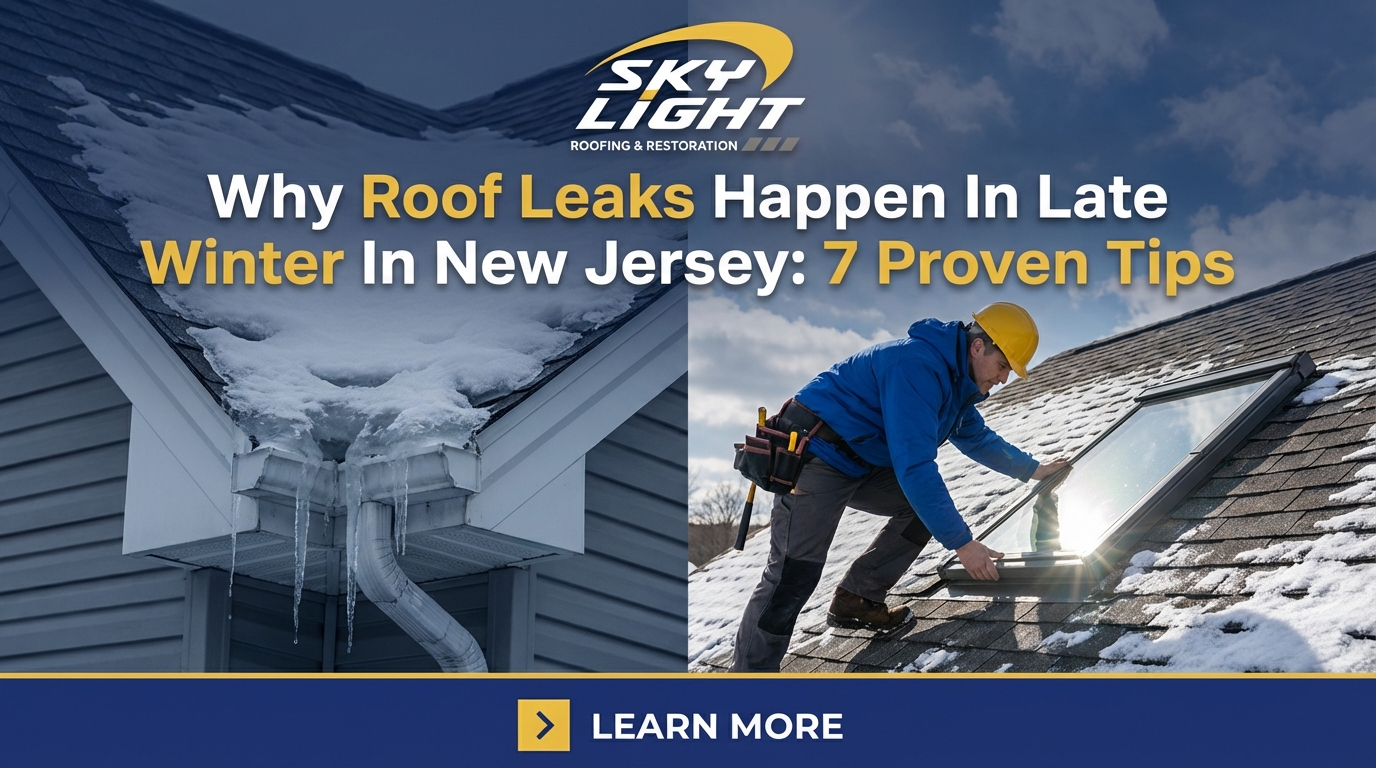
Why Roof Leaks Happen In Late Winter In New Jersey: 7 Proven Tips
Why Roof Leaks Happen In Late Winter In New Jersey (And How To Prevent Major Damage)
New Jersey homeowners often breathe a sigh of relief once February begins to wind down, thinking the worst of the winter weather is behind them. However, for roofing professionals, late winter is known as "leak season." As the Garden State moves through the volatile temperature swings of February and March, your roofing system faces its most grueling test. What many residents don’t realize is that a roof leak during a late-winter thaw is rarely the result of a single storm. Instead, it is the cumulative result of months of freezing, thawing, and structural stress that finally reaches a breaking point.
Why do roof leaks happen in late winter in New Jersey? Most late-winter roof leaks in NJ are caused by the freeze-thaw cycle and the formation of ice dams. When heat escapes from your attic, it melts the snow on your roof; that water then refreezes at the cold eaves, creating a dam that forces liquid water upward under shingles and into your home’s interior. This process, combined with clogged gutters and months of snow-load stress, causes seals to fail exactly when the snow begins to melt.
At Skylight Roofing & Restoration, we see the devastating effects of these "stealth leaks" every year. By the time you notice a brown stain on your ceiling or a drip in your attic, the water may have been infiltrating your home for weeks. Understanding the unique environmental factors of a New Jersey winter is the first step in protecting your greatest investment. In this comprehensive guide, we will break down the science of late-winter leaks, the specific vulnerabilities of NJ architecture, and the proactive steps you can take to prevent catastrophic water damage before the spring rains arrive.
1. The Science of the Late-Winter Leak: Ice Dams and Temperature Swings
The primary culprit behind late-winter roofing failures in New Jersey is the phenomenon known as the ice dam. While the ice itself isn't the leak, it acts as a reservoir. When snow accumulates on your roof, it serves as an insulator. If your attic is not properly ventilated or insulated, heat from your living space rises and warms the roof deck. This causes the bottom layer of snow to melt, even when the outside air temperature is well below freezing. As this meltwater flows down the slope of the roof, it eventually reaches the eaves and gutters, which are not warmed by the attic and remain at sub-freezing temperatures.
Once the water hits the cold eave, it refreezes, forming a ridge of ice. Over several days of varying temperatures—a classic New Jersey winter pattern—this ridge grows higher and higher. Eventually, the dam creates a pool of standing water on the roof. Because roofing shingles are designed to shed water moving downward via gravity, they are not waterproof against standing or upward-wicking water. The pooled water finds its way under the shingle tabs, through nail holes, and eventually into your insulation and ceiling.
The severity of ice dams in late winter is exacerbated by what locals often call the "Jersey Death Crust." This is a thick, hardened layer of ice and old snow that has undergone multiple melt-refreeze cycles since December. This crust is incredibly heavy and dense, making it difficult for new meltwater to escape the roof surface. By the time late February arrives, the sheer volume of ice built up along the roof's edge can weigh hundreds of pounds, pulling at your gutters and stressing the structural integrity of your fascia boards.
2. The Cumulative Stress Factor: Why Roofs Fail Now vs. December
Many homeowners ask why their roof survived the big blizzard in December but started leaking during a minor thaw in late February. The answer lies in cumulative stress. A roofing system is composed of various materials—asphalt, metal, rubber, and wood—each of which expands and contracts at different rates when temperatures change. By the time late winter rolls around, these materials have gone through dozens, if not hundreds, of these expansion cycles. This "thermal shock" eventually causes sealants around chimneys and vents to crack and shingle granules to loosen.
Think of your roof like a paperclip that you bend back and forth. The first few times you bend it, it stays intact. But eventually, the metal fatigues and snaps. Your roof's flashing works the same way. The metal flashing around your chimney or in the roof valleys is held in place by sealants and nails. The constant movement caused by New Jersey's fluctuating winter temperatures weakens these bonds. By late winter, a small gap that was negligible in December has widened into a primary entry point for water.
Furthermore, the weight of snow load plays a significant role in late-winter failures. New Jersey snow can be particularly "wet" and heavy compared to the powdery snow found in the Midwest. As multiple layers of snow accumulate and compress over months, the weight can cause subtle shifts in the roof's framing. These shifts are often just enough to pull flashing away from a brick chimney or cause a skylight seal to fail. When the final thaw of the season begins, the roof is at its weakest structural point of the entire year.
3. Top 5 Causes of Late-Winter Roof Leaks in NJ
Clogged and Frozen Gutters
If you didn't clear your gutters after the last leaves fell in November, you are at high risk for a late-winter leak. Debris in the gutters traps moisture, which freezes into solid blocks of ice. When gutters are frozen solid, meltwater from the roof has nowhere to go. It backs up onto the roof deck and under the shingles. In many NJ homes, this results in water dripping behind the siding or into the soffit, leading to hidden rot and mold growth that isn't discovered until it's too late.
The Solar Panel Factor
New Jersey has one of the highest rates of residential solar adoption in the country. While solar panels are great for energy, they create unique roofing challenges in winter. Snow often gets trapped between the panels and the roof surface, or it slides off the glass panels and piles up in a massive drift in the roof valleys. These localized snow piles create "micro-ice dams" that wouldn't normally form on a standard roof. Additionally, the mounting brackets for solar panels are penetrations in the roof membrane that can leak if ice accumulates around them and creates constant hydrostatic pressure.
Coastal Salt Spray and Corrosion
For our clients at the Jersey Shore, from Asbury Park down to Cape May, salt spray is a silent roof killer. During winter Nor'easters, salt-laden moisture is blown onto the roof and into the crevices of the flashing. Salt accelerates the corrosion of metal components and can degrade the adhesives used in roofing sealants. By late winter, the protective coatings on older metal roofs or flashing may have been compromised, allowing water to penetrate through pinhole leaks caused by winter-long oxidation.
Failed Pipe Boot Flashing
The rubber boots that surround your plumbing vent pipes are often the first things to fail during a NJ winter. The rubber becomes brittle in the extreme cold. When heavy snow slides down the roof, it can catch on these boots and tear them or pull them away from the pipe. Since these pipes lead directly into your kitchen and bathroom walls, a leak here can cause significant interior damage very quickly during a late-season thaw.
Skylight Seal Degradation
Skylights are beautiful, but they are essentially a giant hole in your roof. The transition between the skylight frame and the roofing material is a prime spot for ice damming. Snow tends to sit on the glass, which is warmed by the interior of the house, creating a constant supply of meltwater right at the seal. In late winter, as the seals have been battered by months of ice, they often give way, leading to drips directly into your living room or bedroom.
4. NJ Architectural Vulnerabilities: Split-Levels and Victorians
New Jersey is home to specific styles of architecture that are more prone to late-winter leaks than others. For example, the classic NJ Split-Level home often features complex rooflines with multiple valleys where different roof planes meet. These valleys act as funnels for snow and ice. If the valley is not lined with a high-quality ice and water shield, the accumulation of the "Jersey Death Crust" in these intersections almost guarantees a leak during the February thaws. Water gets trapped in the "V" of the valley and has nowhere to go but up and under the shingles.
Older Victorian homes, common in towns like Montclair, Ocean Grove, or Haddonfield, present a different set of challenges. These homes often have steep pitches and ornate turrets, but they were built before modern insulation standards existed. Many Victorians have "balloon framing," which allows heat to travel easily from the basement all the way to the attic. This excessive heat loss makes these homes primary targets for massive ice dams. Furthermore, the built-in "yankee gutters" found on some historic NJ homes are notorious for leaking into the wall cavities if they are not meticulously maintained through the winter months.
Cape Cod style homes, another NJ favorite, often have shed dormers. The point where the dormer roof meets the main roof is a critical junction. Because dormers often have a lower slope than the rest of the roof, snow sits on them longer. Homeowners with Cape Cods should be especially vigilant about checking the interior ceilings of their upstairs bedrooms (the ones inside the dormers) for signs of moisture as the snow begins to melt in late February.
5. Hidden Culprit: Poor Attic Health (Ventilation and Insulation)
Most people think a roof leak is a "shingle problem," but more often than not, it’s an "attic problem." Your roof is a system, and the attic is the engine that keeps it running. To prevent ice dams, your attic should be the same temperature as the outside air. This requires two things: high-performance insulation to keep the house heat inside the living space, and robust ventilation to allow any escaped heat to exit the attic quickly. If your attic is too warm, you are essentially creating a hot plate that melts snow and drives the ice dam cycle.
In many New Jersey homes, insulation has settled over time or was never thick enough to begin with. The Department of Energy recommends an R-value of R-49 to R-60 for NJ attics. If you can see your floor joists in the attic, you don't have enough insulation. This lack of thermal resistance allows heat to radiate directly through the roof deck, melting the snow from the bottom up. Even with good insulation, "bypass leaks" around recessed lights, attic hatches, and plumbing stacks can pump warm air into the attic space, causing localized melting and ice dams.
Ventilation is the second half of the equation. Intake vents (soffit vents) and exhaust vents (ridge or gable vents) must work together to create a continuous flow of air. If your soffit vents are blocked by insulation—a common mistake made by DIYers—the air cannot circulate. This stagnant air becomes warm and moist, which not only causes ice dams but also leads to the growth of mold and mildew on the underside of your roof sheathing. At Skylight Roofing & Restoration, we always check the attic health during a leak inspection because fixing the shingles without fixing the attic is just a temporary band-aid.
6. Attic Frost vs. Roof Leak: Identifying "Attic Rain"
One of the most confusing things for NJ homeowners in late winter is experiencing a "leak" when there is no actual hole in the roof. This is often a phenomenon known as "attic rain." During a deep freeze (like those sub-zero nights in January), warm, moist air from your showers, cooking, and breathing can escape into a poorly ventilated attic. This moisture hits the freezing cold roof nails and sheathing and turns instantly into frost. Over a few weeks of cold weather, a thick layer of white frost can build up inside your attic.
When the first warm, sunny day of late February arrives—even if it's only 40 degrees—that frost melts rapidly. Because it's happening all at once across the entire surface of the roof, the water can drip down in quantities that look exactly like a major roof leak. Homeowners will see water dripping from light fixtures or staining the ceiling. However, the solution for attic rain is not a new roof; it's improved ventilation and the sealing of air leaks from the living space into the attic.
How can you tell the difference? A true roof leak usually happens during a rainstorm or while snow is actively melting on the roof. Attic rain often happens on a bright, sunny day following a long cold snap. If you go into your attic with a flashlight and see hundreds of rusty nail heads or water droplets hanging from the tips of nails, you are likely dealing with a condensation issue rather than a structural roofing failure. Regardless, both require professional attention to prevent long-term mold issues and structural rot.
7. Spotting the Signs Before the Drip: Interior and Exterior Warning Signals
You don't have to wait for a bucket-worthy drip to know your roof is in trouble. Early detection can save you thousands of dollars in restoration costs. On the exterior of your home, look at your icicles. While they may look pretty, large, thick icicles—especially those forming behind the gutters or along the siding—are a major red flag. This indicates that water is backing up and finding a path behind your home's drainage system. If you see icicles that are brown or stained, it means the water is already picking up tannins from your roof's wooden structure or dirt from your attic.
Another exterior sign is "gutter pull-away." If you notice a gap between your gutters and the roofline, or if the gutters seem to be sagging, the weight of late-winter ice has likely compromised the hangers. This allows water to pour directly down your foundation or, worse, into your soffits. You should also look for shingles that appear to be "tenting" or lifting. As ice pushes its way under a shingle, it can permanently deform the asphalt, leaving it vulnerable even after the ice melts.
Inside the home, check the corners of your ceilings and the areas around windows. Bubbling paint or wallpaper is often the first sign of a slow moisture intrusion. If you have an attached garage, check the ceiling there as well; garages are often unheated and under-insulated, making them prime spots for ice dams. Don't ignore a "musty" smell that appears suddenly during a thaw; this is often the scent of wet insulation and wood. If you can safely access your attic, look for wet spots on the floor or dark staining on the rafters.
8. Prevention Strategy: Immediate Actions for Homeowners
If you are reading this in the middle of a New Jersey winter and you're worried about your roof, there are immediate steps you can take. First, if you have a safe way to do so, use a long-handled roof rake to remove snow from the first 3-4 feet of your roof's edge. This prevents the fuel for an ice dam from accumulating in the first place. Be extremely careful not to strike the shingles, as they are brittle in the cold. You are simply looking to clear a path for meltwater to reach the gutters.
Never climb on a snowy or icy roof. It is incredibly dangerous and can lead to fatal falls. Additionally, walking on a frozen roof can shatter the brittle shingles, causing more damage than the ice itself. If you already have a massive ice dam, avoid the temptation to hack at it with a hammer or shovel. One wrong move and you'll put a hole right through your shingles and the plywood deck below. Instead, you can fill a nylon stocking with calcium chloride (not rock salt, which damages shingles) and lay it vertically across the dam to melt a drainage channel through the ice.
Lastly, keep your interior heat at a consistent level. While it's tempting to crank the heat during a NJ cold snap, massive spikes in interior temperature can accelerate the snow-melting process on the roof, fueling ice dams. If you have a known problem area, you can temporarily aim a fan at the spot in the attic where the leak is occurring. This cold air can help refreeze the water and stop the drip until a professional can arrive to provide a permanent fix.
9. Long-Term Solutions: Upgrading for the Next NJ Winter
Once the immediate threat has passed, it's time to think about long-term prevention. A standard roof replacement in New Jersey should always include a heavy-duty ice and water shield. In NJ, building codes typically require this waterproof membrane to extend at least 24 inches past the interior wall line. However, for homes with low slopes or historical ice dam issues, we often recommend double rows of protection. This membrane creates a watertight seal around every nail, ensuring that even if water backs up, it cannot reach the wood deck.
Upgrading your insulation is another high-ROI move. Blown-in cellulose or fiberglass can fill the gaps in your existing insulation and significantly reduce the heat transfer that causes ice dams. While you are at it, ensure your roofing contractor installs proper baffles at the eaves. These plastic or foam channels ensure that your new insulation doesn't block the soffit vents, maintaining that critical airflow that keeps the roof deck cool.
Consider the type of shingles you choose for your next roof. Some modern architectural shingles are designed with enhanced wind and impact resistance, which helps them stand up to the heavy snow and ice of a Jersey winter. Furthermore, if you have a section of your roof that is a "dead valley" or has a very low pitch, it might be worth switching from shingles to a standing seam metal roof or a rubber (EPDM/TPO) membrane. These materials are much more adept at handling standing water and ice accumulation than traditional asphalt shingles.
10. Navigating Insurance: Ice Dams vs. Maintenance Issues
When a late-winter leak causes interior damage, the first instinct is to call the insurance company. However, NJ homeowners need to be careful. Insurance generally covers damage that is "sudden and accidental." An ice dam that forms during a specific storm and causes a leak is typically covered. However, if the insurance adjuster determines that the leak was caused by "gradual wear and tear" or a lack of maintenance (like clogged gutters), they may deny the claim.
It is vital to document everything. Take photos of the snow accumulation, the ice dams on the exterior, and the water damage inside as it happens. At Skylight Roofing & Restoration, we provide detailed inspection reports that can help clarify the cause of the leak for your insurance carrier. We often work directly with adjusters to explain how the weather conditions led to the failure, ensuring you get the coverage you're entitled to under your policy.
Keep in mind that while insurance might pay to fix your ruined drywall and soggy insulation, they rarely pay for the roof repair itself if the roof is past its life expectancy. This is why proactive maintenance is so important. A small investment in a professional roof inspection in the fall can prevent a massive out-of-pocket expense in late February. Insurance is there for catastrophes, but it's not a substitute for proper roof care.
11. Professional Help: When DIY Prevention Isn't Enough
There comes a point where DIY methods are no longer effective or safe. If you have water actively dripping into your home, you need a professional roofer who understands the unique climate of the Northeast. Emergency roofing services during a New Jersey winter require specialized equipment and knowledge. We have the safety gear to access roofs even in icy conditions and the expertise to find the source of a leak that may be 10 feet away from where the water is actually entering the ceiling.
Choosing a local contractor is essential. A company based in the South might not understand the intricacies of ice damming or the building codes specific to New Jersey's coastal and inland zones. Skylight Roofing & Restoration is deeply rooted in the community. We pride ourselves on craftsmanship that isn't just about looking good, but about performing under the harshest conditions. Our faith-based values mean we give you an honest assessment—if you don't need a new roof, we'll tell you, and we'll focus on the specific repairs and attic upgrades that will solve the problem.
Don't let a late-winter leak turn into a springtime mold project. Water that enters your home in February can quickly lead to structural rot in the warm, humid days of May. By acting now, you can mitigate the damage and ensure your home remains a safe, dry sanctuary for your family. Whether it's a quick emergency repair or a comprehensive plan for a new, winter-proof roofing system, getting professional eyes on your roof is the smartest move you can make this season.
Ready to Get Started?
Delivering superior craftsmanship and exceptional roofing and restoration services driven by a commitment to customer satisfaction, faith-based values, and lasting results. Protect your New Jersey home from late-winter damage today.
Visit Our Homepage